
Possible asteroid collision with moon in 2032
Note: AI technology was used to generate this article's audio.
- Asteroid could strike the moon and send debris toward Earth in 2032
- Scientists study event for rare lunar data
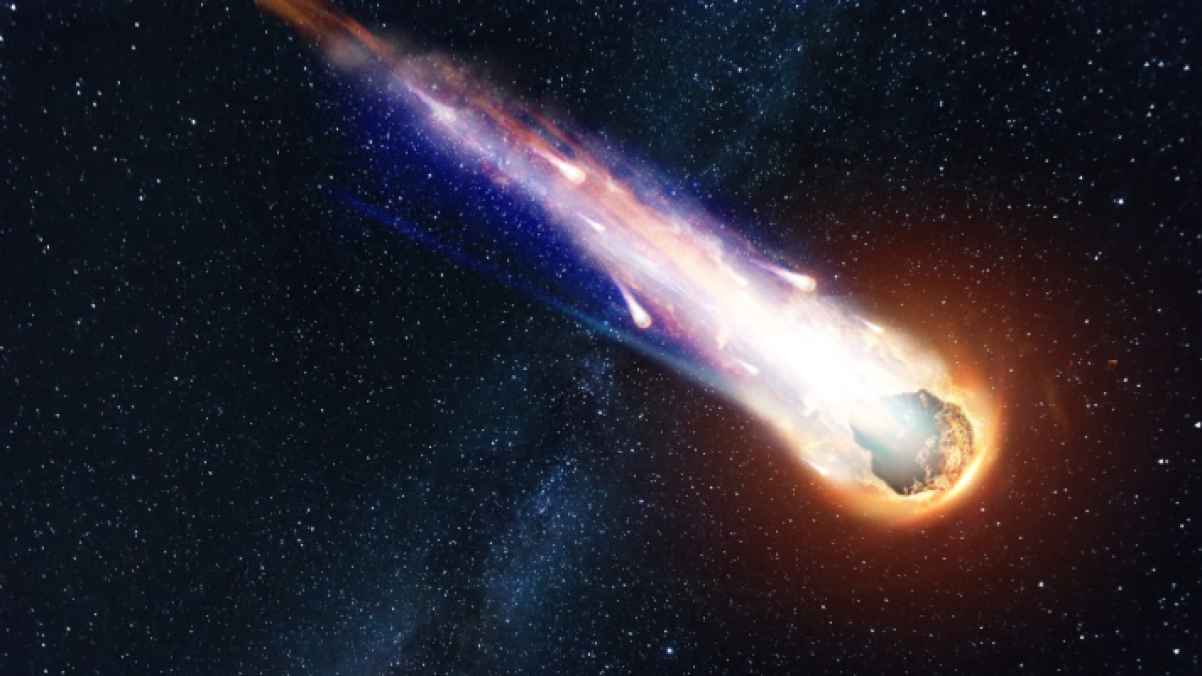
Space scientists have warned that an asteroid could collide with the Moon in December 2032, potentially sending debris toward Earth and threatening satellites, while also offering a rare opportunity for scientific study.
The asteroid, identified as 2024 YR4 and estimated to be about 60 meters wide, currently has a 4% chance of hitting the Moon on December 22, 2032.
Although the likelihood is low, researchers note that the impact would be powerful enough to attract global attention.
A new study by Yifan He of Tsinghua University and colleagues, released as a preprint, indicates that the collision could release energy comparable to a medium-sized nuclear explosion, making it the strongest Moon impact recorded in modern times.
The study predicts that the impact could form a crater roughly one kilometer wide and trigger a global lunar quake measuring around magnitude 5, providing valuable data on the Moon’s internal structure, which is difficult to study directly.
The explosion would also eject large amounts of debris into space, some of which could fall to Earth days later, creating an intense meteor display visible over parts of South America, North Africa, and the Arabian Peninsula, with simulations suggesting millions of meteors per hour could enter Earth’s atmosphere.
Despite the scientific potential, the event carries significant risks, as falling debris could damage property, and space agencies warn that fragments might threaten satellites, potentially triggering a chain reaction known as the Kessler Syndrome, which could disrupt global communications and navigation systems.
Because of these dangers, space agencies are considering a mission to deflect or alter the asteroid’s path, a decision that will balance planetary safety with the chance to observe an unprecedented natural experiment.