
Saving El-Fasher… is saving what remains of the soul, and the voices that weep for the wounded homeland
Sudan Under the Weight of Pain, Oppression, and Heartbreak
Scenes emerging from Sudan evoke deep resentment and sorrow
In the heart of Sudan, the humanitarian tragedy is unfolding in its most brutal form. People wake up each day to new stories of pain and loss. What is happening in El-Fasher, Kordofan, and other cities is not merely a military conflict, but a continuous bleeding of the nation’s soul—touching every home and leaving an unhealing scar in every heart. Families are scattered between displacement and exile, children are lost between the screams of war and the absence of safety, while mothers remain on the edge of collapse, waiting for someone to return, or for news that may calm the fear weighing heavily on their hearts.
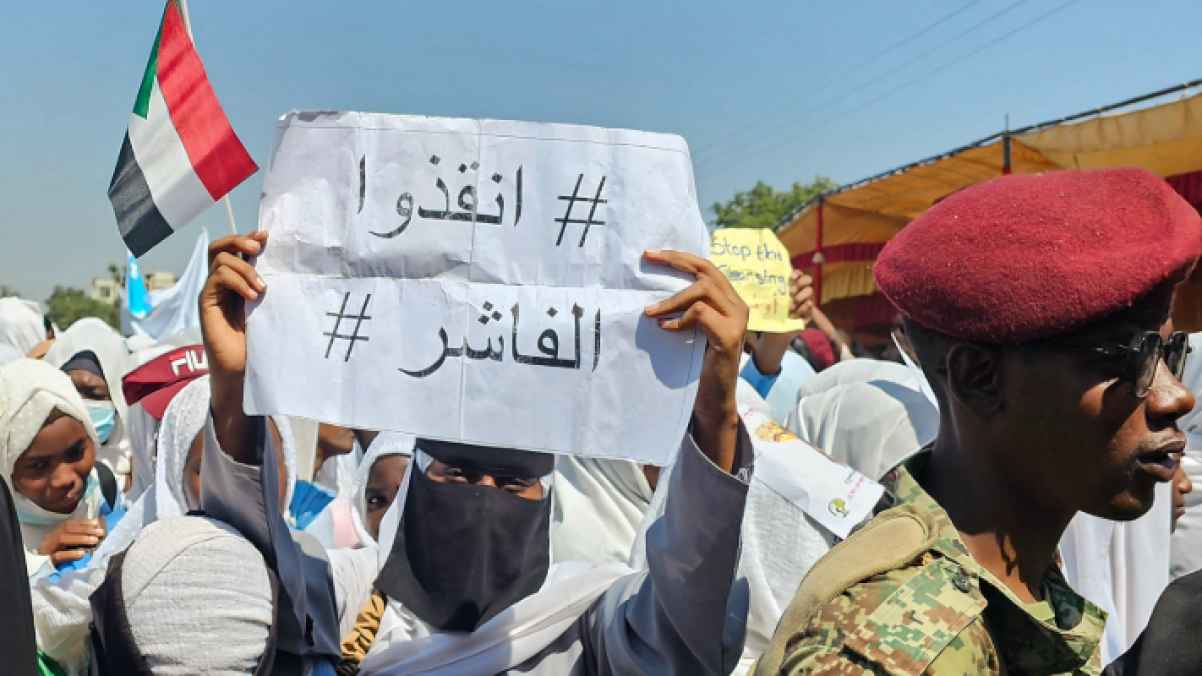
During the demonstrations taking place across Sudanese cities, a woman raises her sign reading "#Save_ElFasher"—not merely as a protest slogan, but as a cry for life. This cry carries within it fear for her loved ones, longing for her city being eaten away by fire, and a plea for the world to hear that a people are being killed and their cities stripped away before everyone’s eyes. It is not an individual cry, but the voice of thousands like her—all searching for a homeland where gunfire stops, streets become safe, and children's laughter is heard again.
Sharing a Loaf of Bread
Amid this reality, the suffering continues with a silence more painful than smoke and destruction. Communities there try to hold on to life despite everything. People share a loaf of bread, drinking water, and the small fragments of hope that keep the spirit from collapsing. Hospitals operate with the bare minimum, schools are turned into shelters, and mosques and churches become places for consolation and spiritual refuge, while the voice of the state fades and the sounds of fear and uncertainty grow louder.
As the fighting shifts to new areas like Kordofan, the situation becomes even more complex. Those who fled from Darfur find no safe refuge; danger follows them to the south and east. The land grows tight around them, as if the homeland itself is shrinking before their eyes. No one knows where they can go, or when this painful cycle of violence and displacement will end.
In the end, the question remains hanging in the skies of Sudan: Who will save this exhausted people? The issue is not merely a conflict over power or influence, but a struggle for survival. Saving El-Fasher is not an emotional slogan—it is a call to save a homeland dissolving between the fires of war and the silence of the world. There is nothing more precious than human life, and no nation deserves to be left alone before such profound pain.