
Scientists discover new species of dinosaurs that lived in China
Note: AI technology was used to generate this article's audio.
- Discovery of a giant plant-eating dinosaur that lived around 190 million years ago in southwestern China
- Its analysis revealed unusual features that help better understand the evolution of long-necked dinosaurs
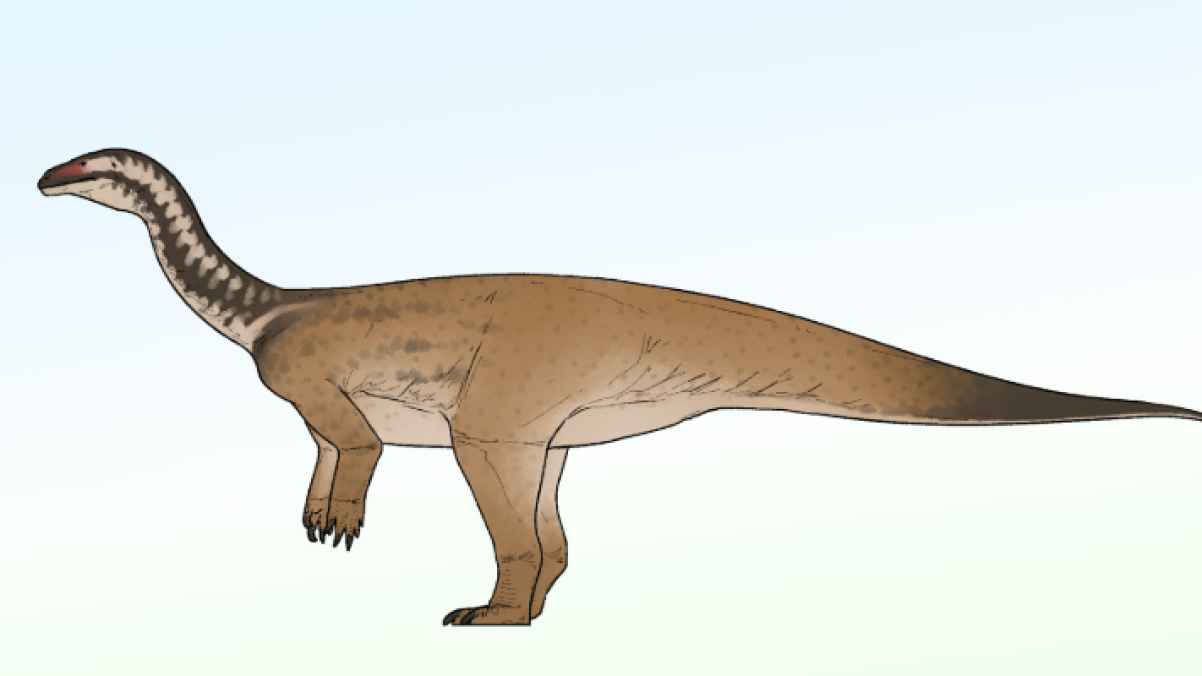
Scientists have identified a new species of dinosaurs that lived about 190 million years ago in what is now China, in a finding considered important for understanding the evolution of giant long-necked dinosaurs and filling a major gap in their evolutionary record.
The newly identified dinosaur, named Xiangyunloong fengming, was a massive herbivore measuring between 9 and 10 meters in length, making it one of the largest plant-eating dinosaurs discovered in China so far.
It lived during the Early Jurassic period, between 201 and 174 million years ago, a key transitional phase that saw the emergence and diversification of long-necked dinosaurs.
The genus name “Xiangyunloong” comes from Xiangyun County, where the fossils were found, combined with “loong,” meaning traditional Chinese dragon.
The species name “fengming,” meaning “phoenix sound,” symbolically refers to birds as living descendants of dinosaurs, and is also linked to the nearby town of Luming, close to the discovery site.
Researchers also noted that the name carries a cultural reference to Lin Fengmian, a prominent Chinese artist and founding president of the China Academy of Art, whose team contributed to the research project.
The species was identified from partial fossil remains, including cervical, pelvic, vertebral, and hip bones, discovered in the Fengjiahe Formation in Yunnan Province, southwestern China.
Scientists explained that Xiangyunloong differs from other long-necked dinosaurs through a unique anatomical structure, combining a relatively larger body, a shorter neck, and a longer tail compared to similar species. This suggests an early stage of body-size expansion in such dinosaurs and possibly the ability to move on two legs.
Researchers believe these traits may represent an alternative evolutionary path to neck elongation seen in related species, highlighting diverse adaptation strategies before the later dominance of giant long-necked dinosaurs.
The discovery, according to a study published in Royal Society Open Science, significantly enhances understanding of the morphological and ecological diversity of early dinosaurs in southwestern China.