
Study Reveals Gap in How Trees Cool Wealthy and Poor Cities
Note: AI technology was used to generate this article's audio.
- Clear disparities in how cities benefit from natural cooling based on income levels
- Limited tree cover reduces climate protection in the hottest urban areas
A recent scientific study shows that trees play a key role in lowering temperatures inside cities around the world, but their cooling impact remains uneven. The effect is significantly weaker in hotter, lower-income cities where the need for natural cooling is greatest.
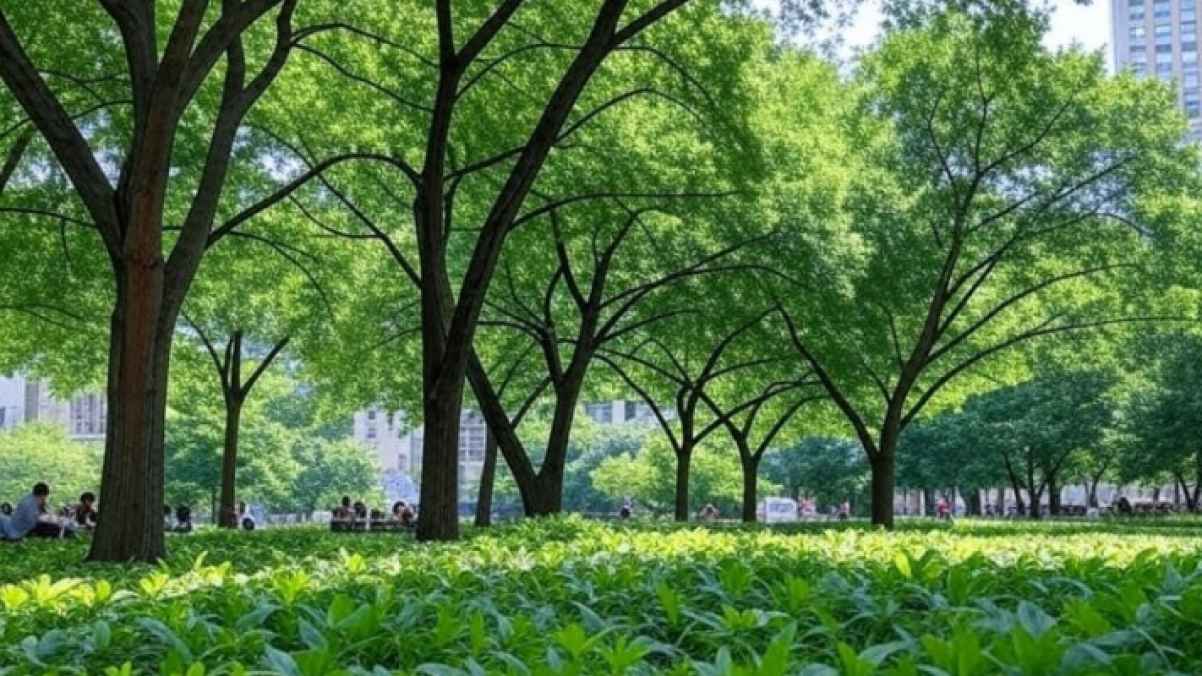
According to the study published in Nature Communications, urban tree cover helps reduce city temperatures by an average of about 0.15°C. This happens through shade provision and water vapor release. Without trees, however, temperatures in cities could rise by around 0.31°C due to the urban heat island effect created by asphalt and dark surfaces that absorb heat.
Researchers analyzed data from nearly 9,000 major cities worldwide, breaking them down into smaller urban zones. This allowed them to measure the impact of trees at neighborhood level rather than relying on broad city-wide averages.
The findings suggest that around 185 million people across 31 major cities benefit from at least 0.3°C of natural cooling provided by trees. However, this benefit drops sharply in poorer and hotter urban areas.
In major cities such as Dakar, Jeddah, andKuwait City, the study found that tree coverage is extremely limited. As a result, millions of residents receive little to no meaningful cooling from urban greenery.
By contrast, cities in wealthier countries like Berlin, Seattle, Washington, and Atlanta show much higher levels of tree cover. Atlanta, for example, has green coverage reaching about 64%, making it one of the cities that benefit most from this natural cooling effect.
Researchers warn of a clear inequality in green space distribution. Wealthier cities tend to have more trees due to stronger economic and policy support, while developing cities face severe shortages despite being more exposed to rising temperatures.
Although tree planting can improve urban climate conditions, scientists emphasize that its impact is still limited compared to the speed of climate change. Even under optimal conditions, trees alone can only reduce future warming by up to around 20%.
Environmental experts stress that addressing climate change requires broader solutions beyond tree planting alone. These include shifting away from fossil fuels toward renewable energy, improving energy storage technologies, and ensuring greener urban planning that distributes green spaces more fairly.