
Three Tactical Factors That Sent Arsenal to the Bucharest Final
Note: AI technology was used to generate this article's audio.
- Road to Bucharest: three key reasons Arsenal tamed Atlético to reach the dream final
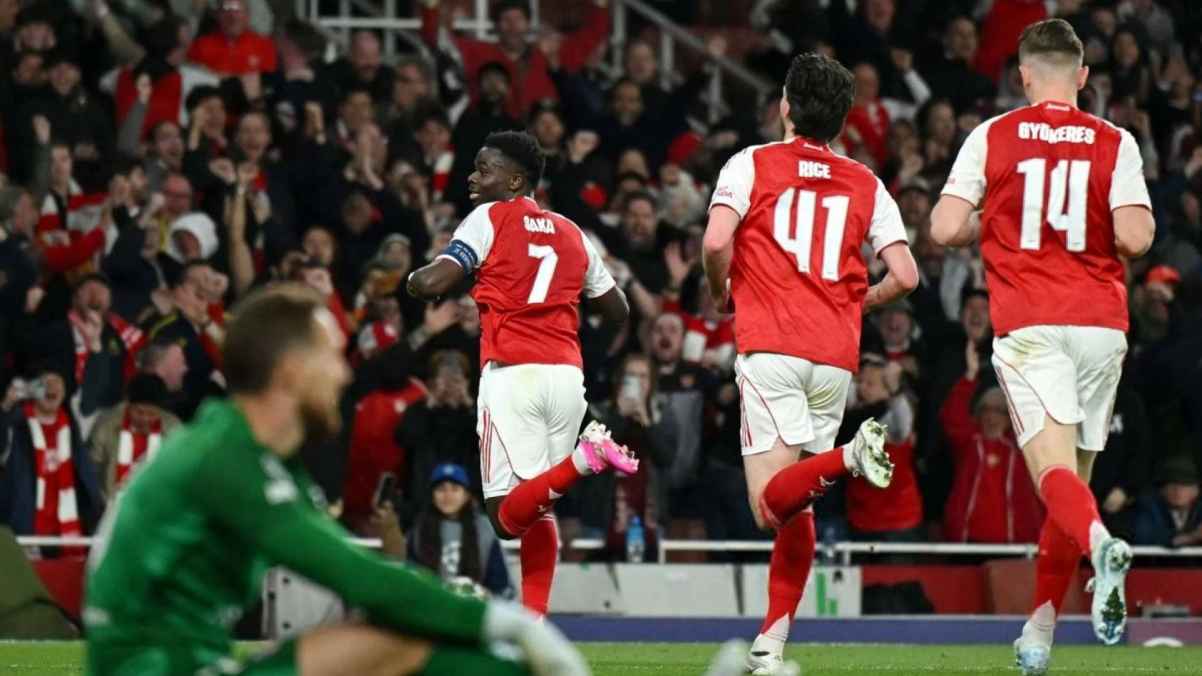
Arsenal have written a new chapter in their European history by reaching the UEFA Champions League final for only the second time ever and the first in two decades, after edging past a stubborn Atlético Madrid side 1-0 in the semi-final second leg. The tense encounter in London was decided by striker Viktor Gyökeres, sending the Gunners through 2-1 on aggregate to set up a final in Bucharest.
Despite Diego Simeone’s typically disciplined and defensive approach, Arsenal imposed their identity on the match. Analysts point to three decisive factors behind the English side’s success: Mikel Arteta’s tactical mastery, Atlético’s puzzling attacking collapse after substitutions, and Arsenal’s intelligent game management in crucial moments.
First: Arteta’s superiority in the “half-space chess match”
Mikel Arteta outsmarted Simeone tactically, avoiding the trap of Atlético’s counter-attacking style. Arsenal relied on vertical passing to break through the Spanish side’s compact 5-4-1 structure, with Bukayo Saka and Trossard stretching the pitch effectively. Viktor Gyökeres’ intelligent movement, along with Riccardo Calafiori’s inward runs, created crucial gaps that led to the decisive goal.
Second: Simeone’s substitutions that backfired
Just when Atlético were expected to push forward, Simeone shocked many by withdrawing key attacking duo Julián Álvarez and Antoine Griezmann. The changes drained the team of creativity and pace, allowing Arsenal’s midfield to dominate possession comfortably. After those substitutions, Atlético struggled to produce any meaningful attacking play.
Third: Tactical flexibility and controlled pragmatism
In the second half, Arsenal showed maturity by shifting approach after taking the lead. Rather than chasing possession in dangerous areas, Arteta allowed Atlético to hold the ball while focusing on defensive structure and closing spaces. This controlled strategy slowed the tempo and suited the Gunners perfectly, while quick counterattacks nearly doubled the advantage and secured a safe passage to the Bucharest final.