Hundreds Take Part in Annual Sleep Contest in South Korea – Video
Note: AI technology was used to generate this article's audio.
- Elderly participant claims top prize in sleep contest
- Strong turnout highlights widespread sleep deprivation in South Korea
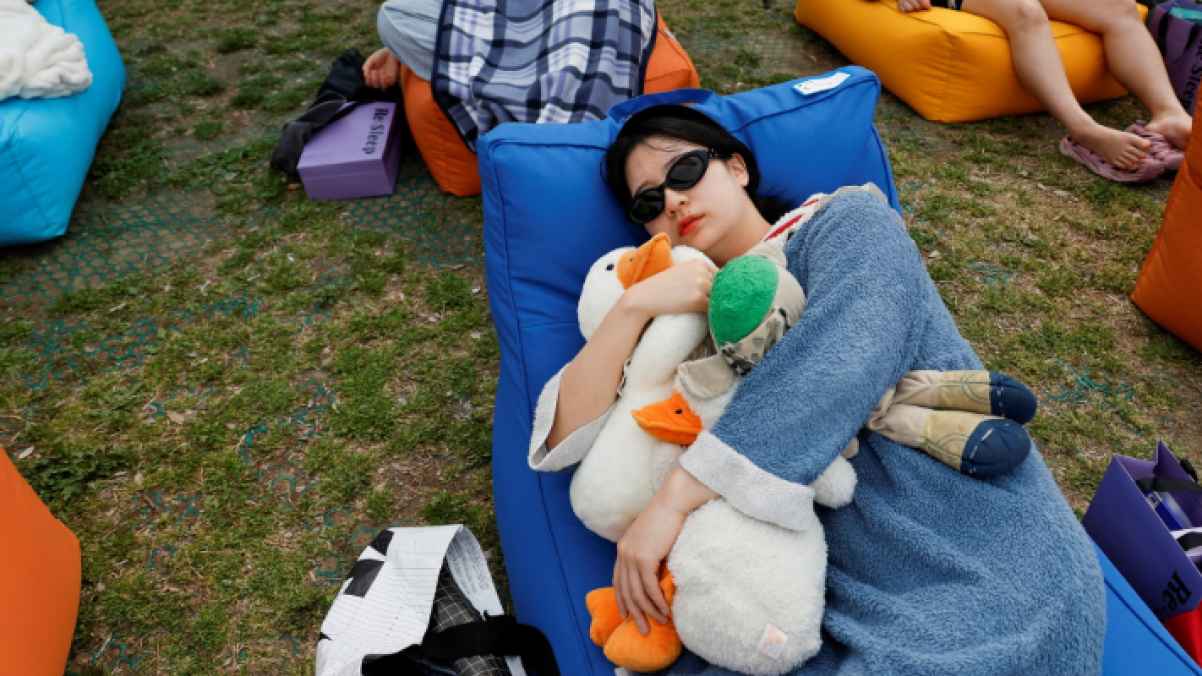
The city of Seoul hosted an unusual public event along the Han River on Saturday, inviting hundreds of residents to take part in a sleep-focused competition designed to spotlight one of South Korea’s most persistent social issues: chronic fatigue and limited rest.
Now in its third consecutive year as part of the city’s spring programming, the contest began in the afternoon under unusual rules, including dress codes inspired by “sleeping princes and princesses,” with participants expected to arrive already exhausted and after having eaten a full meal.
As the event unfolded, many competitors appeared visibly drained, reflecting the intense daily pressures of life in the capital, known for its fast-paced work culture and constant activity.
One university student said he survives on only a few hours of sleep due to studies and part-time work, relying on short daytime naps to cope with exhaustion.
A young English teacher also took part dressed in a koala costume, saying she struggles with insomnia and chose the outfit because of the animal’s reputation for long, deep sleep.
The event, which has become an annual tradition, reflects a broader national concern. South Korea consistently ranks among the most sleep-deprived countries within the OECD, with long working hours and limited rest.
At the start of the competition, participants wore eye masks while organizers monitored heart rates to assess relaxation and sleep quality.
In the final results, an 80-year-old man claimed first place, while a man in his thirties finished second, saying he had been under heavy work pressure due to shift schedules and long daily commutes, and welcomed the chance to “recharge” by the Han River.