
Gaza is suffocating from hunger… and queues of displaced people are searching for a lifeline meal

Trending|24/4/2026
Gaza is suffocating from hunger… and queues of displaced people are searching for a lifeline meal
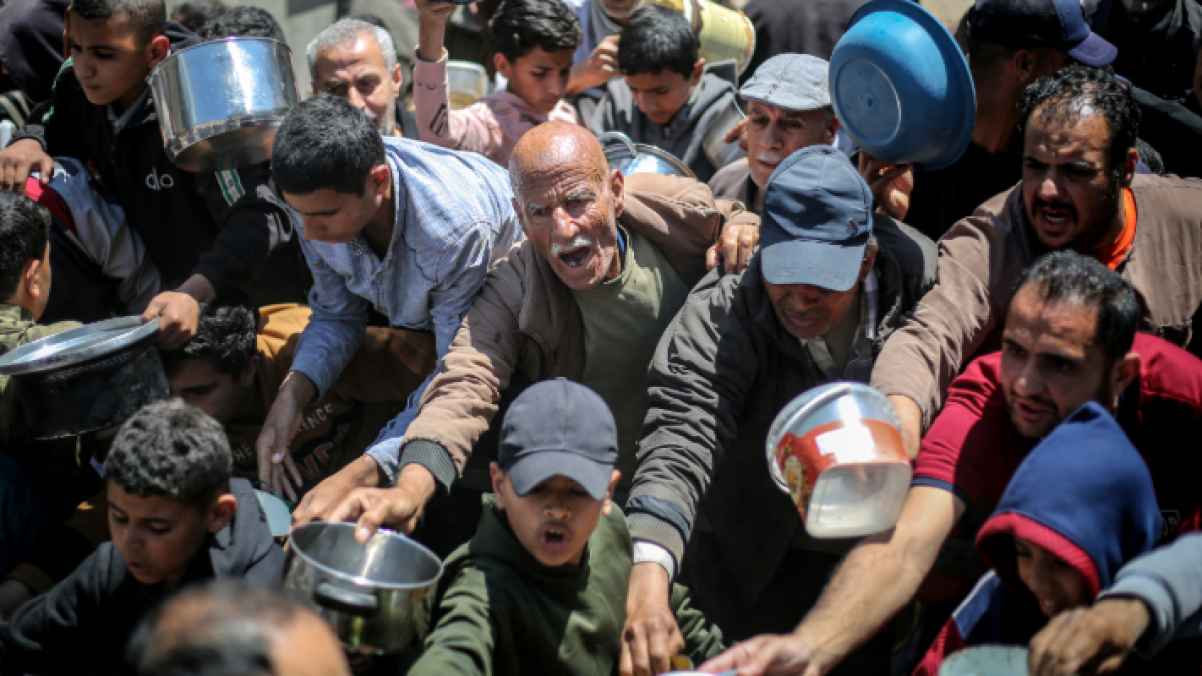
Displaced people line up to receive their food rations at the Nuseirat refugee campPain and sorrow never leave the proud face of Gaza Gazan people search for a glimmer of hope to pull them out of the depths of hardship In a scene that captures the harshness of reality, displaced Palestinians line up in long queues at charity kitchens in the Nuseirat camp in central Gaza, carrying in their eyes a mix of exhaustion and hope, waiting for meals that may not be enough to sustain them for a full day. No sound rises above the voice of need, and nothing matters more than the moment a hand reaches a simple plate that has become a blessing in times of scarcity. A silent yet painful crowding… bodies draw close, steps are led by anxious glances, and each person tries to secure their share before the food runs out. No one complains, despite the visible fatigue on their faces, as everyone realizes that what is being offered, though little, is a lifeline in a reality that tightens day after day. Children stretch their small hands among the crowds, clinging to the chance of receiving a warm meal, while mothers stand firm, trying to hide their fear and anxiety behind heavy patience. In those lines, stories intertwine—stories of loss and displacement, others of homes that are gone, and days that were once simpler and safer. Since the ceasefire came into effect, large parts of the Strip remain under control, while nearly two million people live in makeshift shelters, facing a harsh humanitarian reality. Between temporary tents and the ruins of homes, securing food has become a daily battle, no less harsh than everything that came before. Yet despite it all, determination remains. In the eyes of those waiting, there is something that resembles hope, and in their steadfast stance, a silent message that life, no matter how harsh, is still worth living. They stand in line not only for food, but for survival—and for a tomorrow they hope will carry less pain.
Listen to this story:
0:00

Note: AI technology was used to generate this article's audio.

Pain and sorrow never leave the proud face of Gaza Gazan people search for a glimmer of hope to pull them out of the depths of hardship

In a scene that captures the harshness of reality, displaced Palestinians line up in long queues at charity kitchens in the Nuseirat camp in central Gaza, carrying in their eyes a mix of exhaustion and hope, waiting for meals that may not be enough to sustain them for a full day. No sound rises above the voice of need, and nothing matters more than the moment a hand reaches a simple plate that has become a blessing in times of scarcity.

A silent yet painful crowding… bodies draw close, steps are led by anxious glances, and each person tries to secure their share before the food runs out. No one complains, despite the visible fatigue on their faces, as everyone realizes that what is being offered, though little, is a lifeline in a reality that tightens day after day.

Children stretch their small hands among the crowds, clinging to the chance of receiving a warm meal, while mothers stand firm, trying to hide their fear and anxiety behind heavy patience. In those lines, stories intertwine—stories of loss and displacement, others of homes that are gone, and days that were once simpler and safer.

Since the ceasefire came into effect, large parts of the Strip remain under control, while nearly two million people live in makeshift shelters, facing a harsh humanitarian reality. Between temporary tents and the ruins of homes, securing food has become a daily battle, no less harsh than everything that came before.

Yet despite it all, determination remains. In the eyes of those waiting, there is something that resembles hope, and in their steadfast stance, a silent message that life, no matter how harsh, is still worth living. They stand in line not only for food, but for survival—and for a tomorrow they hope will carry less pain.