
Greek Volcano Shows ‘Hidden’ Activity Despite Being Dormant for Over 100,000 Years
Note: AI technology was used to generate this article's audio.
- Sustained magma activity beneath the Methana volcano despite thousands of years without eruption
- Warnings that volcanic silence may conceal deep buildup requiring revised hazard assessments
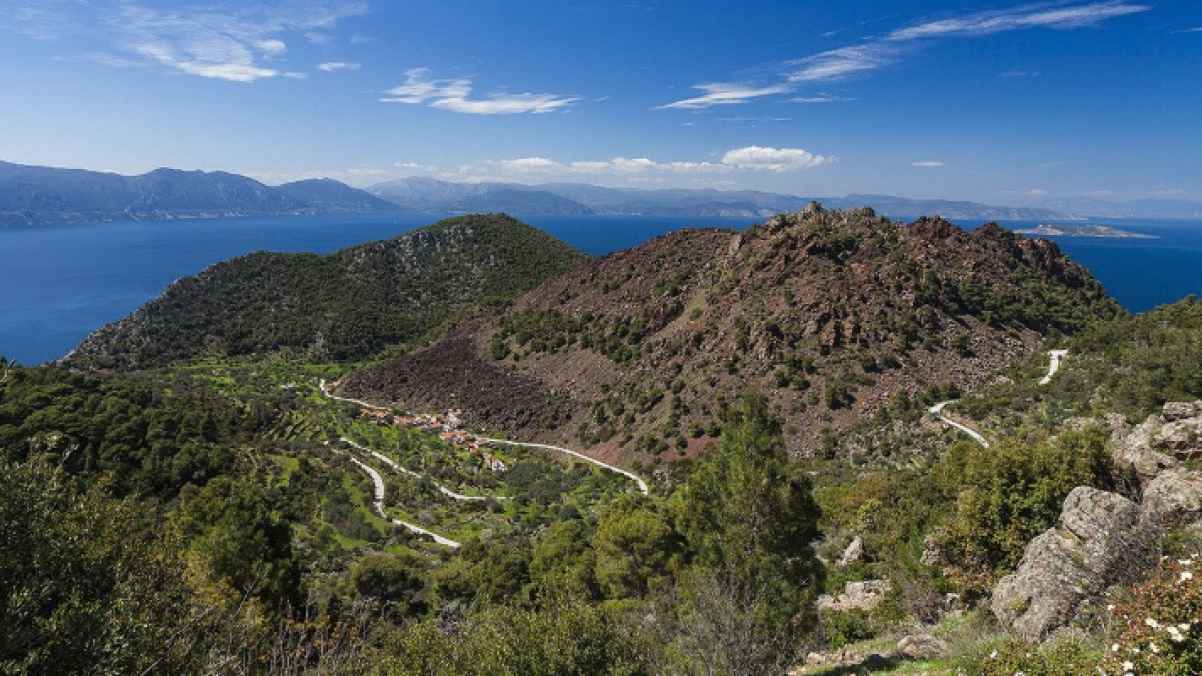
A recent scientific study has found that the Methana volcano in Greece, long believed to have been dormant for hundreds of thousands of years, is still experiencing significant magma accumulation deep beneath its surface, despite no eruptions or emissions for more than 100,000 years.
The volcano, located around 50 kilometers southwest of Athens, was previously considered inactive until new analyses revealed ongoing geological activity within its deep magma reservoirs.
Published in Science Advances, the study shows that magma formation beneath Methana has been occurring in a near-continuous manner, even during its prolonged surface quiescence, raising new questions about how dormant volcanoes are assessed in terms of risk.
Researchers relied on microscopic zircon crystals formed within cooling magma chambers. These crystals act as natural recorders, preserving the history of volcanic activity over time.
Scientists analyzed more than 1,250 crystals spanning up to 700,000 years, allowing them to reconstruct what they describe as the volcano’s “internal life” with high precision.
The findings indicate that magma production beneath Methana remained largely continuous over long periods, with deep underground phases of heightened activity despite the absence of any surface eruptions.
The analysis also revealed that the magma in the volcano’s upper reservoir is unusually rich in water compared to expectations, which researchers attribute to interactions between the Earth’s mantle and ocean-floor sediments, along with significant water input.
This process effectively “hydrates” the mantle, enhancing magma formation while potentially reducing the frequency of surface eruptions, without necessarily lowering overall risk.
Scientists caution that prolonged quiet periods do not mean a volcano is extinct, but may instead indicate the gradual buildup of a large magmatic system capable of producing powerful future eruptions.
The study calls on monitoring agencies worldwide to reassess the hazard levels of seemingly dormant volcanoes that may still conceal active internal systems.