
Lost Words by Ancient Greek Philosopher Discovered After 2,000 Years
Note: AI technology was used to generate this article's audio.
- Ancient fragment sheds new light on Empedocles’ poetry and reshapes understanding of his intellectual legacy
- Discovery reopens debate on his ideas and influence on classical thought
A newly published study has revealed an ancient papyrus containing previously unknown verses by the Greek philosopher Empedocles, offering a rare direct glimpse into his thought and reshaping modern understanding of his role in early Greek philosophy.
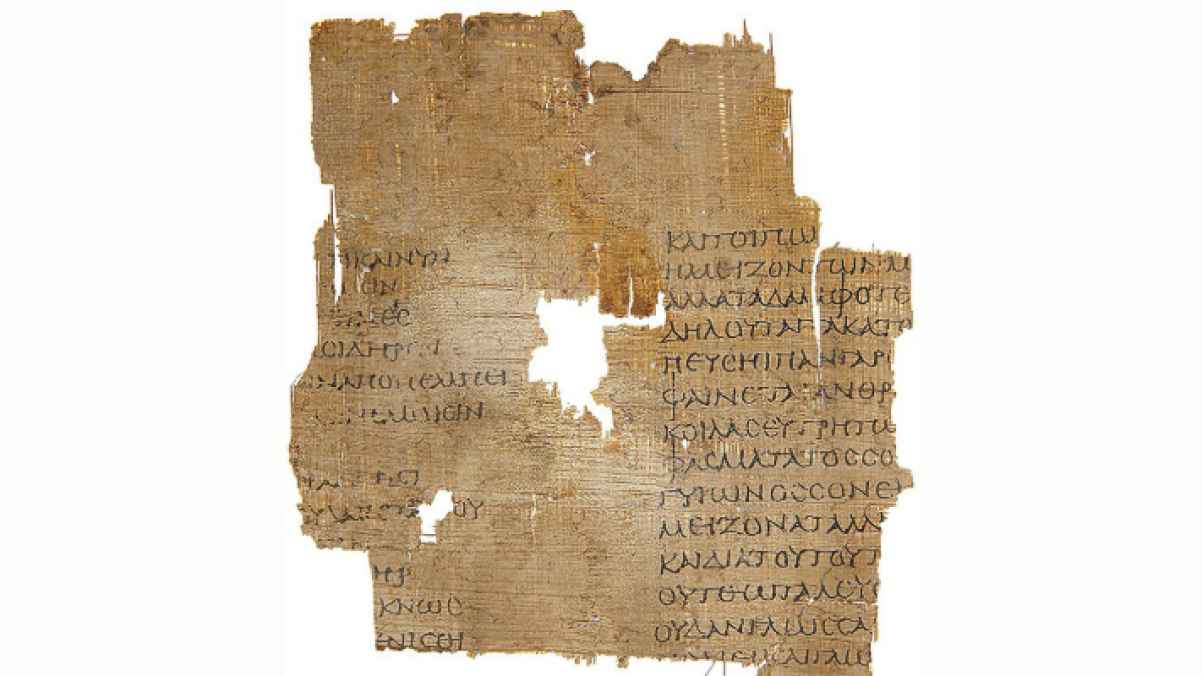
The papyrus, uncovered in the archives of the French Institute of Oriental Archaeology in Cairo, dates back roughly 2,000 years and preserves 30 poetic lines not previously known, attributed to his philosophical work Physica.
Empedocles, who lived in 5th-century BCE Sicily, is considered one of the most important pre-Socratic thinkers. He is best known for his theory of the four classical elements—earth, water, air, and fire—alongside the opposing forces of Love and Strife, which he believed governed all natural processes in both the physical world and human perception within a unified philosophical system.
His ideas later influenced major figures in Western thought, including Plato and Aristotle, as well as Roman writers such as Lucretius.
Direct Access to the Original Text
Researchers say the significance of the discovery lies in the fact that it allows scholars, for the first time, to read Empedocles in his own words rather than relying on indirect quotations preserved in the works of later philosophers and historians such as Plato, Aristotle, and Plutarch.
Researcher Nathan Carlig noted that the newly identified papyrus represents the only known copy of Physica, and also reveals connections to fragments of the same manuscript preserved in Strasbourg.
Ideas Ahead of Their Time
The recovered passages focus on theories of particle emissions and sensory perception, particularly vision. The study also highlights conceptual links with later texts by Plutarch, Plato, and Theophrastus, as well as echoes of Empedocles’ thought in the works of Aristophanes and Lucretius.
The findings even suggest that his ideas may have anticipated early forms of atomic theory later developed by Democritus.
A “Second Renaissance” for Ancient Thought
To emphasize the importance of the discovery, researchers compare it to finding the original pages of a major literary work known only through scattered excerpts and references.
Nathan Carlig described such discoveries as a kind of “second Renaissance” for classical literature, opening the door to a renewed assessment of Empedocles’ philosophy and a deeper understanding of his place in the history of Greek thought and his relationship with both predecessors and successors.