
“Video” Shows “Artemis 2” Splashdown in the Pacific Ocean
Note: AI technology was used to generate this article's audio.
- Manned mission completes first lunar orbit in over 50 years
- Crew travels more than 1 million kilometers and returns safely to Earth
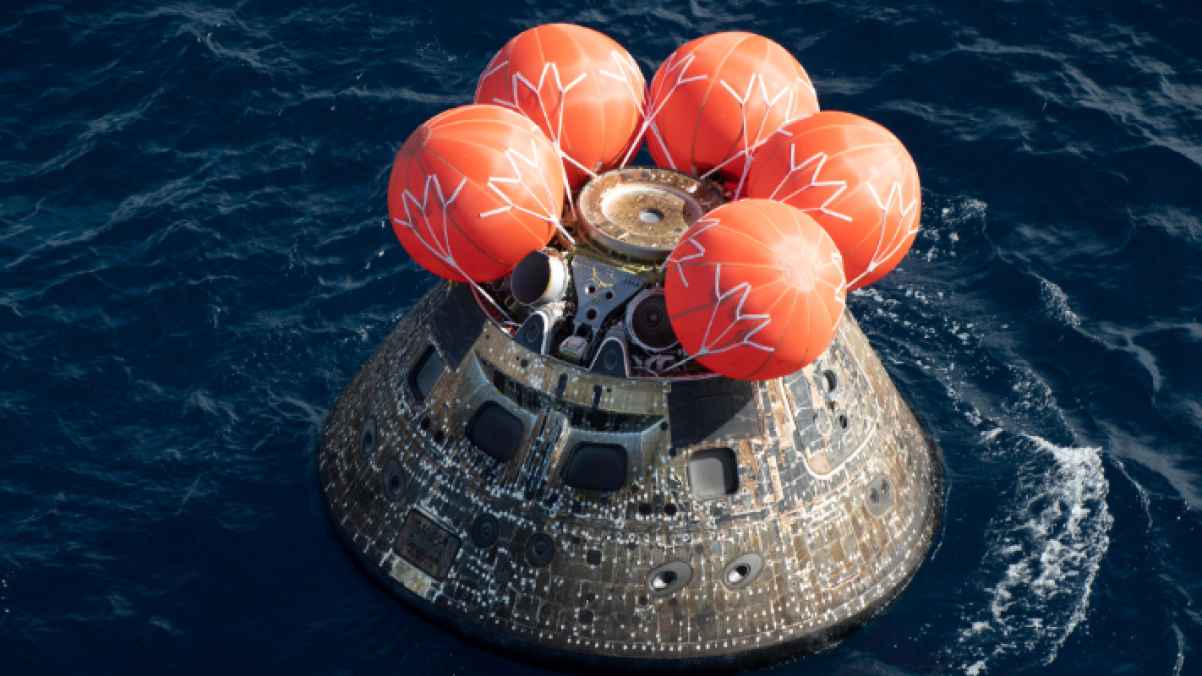
The Orion spacecraft operated by the US space agency NASA returned to Earth on Friday evening after splashing down in the Pacific Ocean off the coast of San Diego, carrying four astronauts who completed a successful journey around the Moon and were reported to be in good health.
The return marked the conclusion of a roughly 10-day mission during which the spacecraft covered more than 1.1 million kilometers on a round trip around the Moon, bringing humans back to this trajectory for the first time in more than five decades.
First human return since Apollo 17
The Artemis 2 crew became the first to follow this route since the Apollo 17 mission in the 1970s, joining a small group of only 24 people who have ever traveled to the Moon and returned safely to Earth.
The crew included commander Reid Wiseman, pilot Victor Glover, mission specialist Christina Koch, and Canadian Space Agency astronaut Jeremy Hansen, who became the first non-American to take part in a human lunar mission, while Koch made history as the first woman to do so.
Striking views from space
As the spacecraft approached Earth, Wiseman described the planet as appearing “glowing in a beautiful blue hue,” a view that once again highlighted Earth’s striking appearance from space.
The astronauts also shared high-resolution images and footage of the lunar surface, along with rare views of Earth from a great distance, in moments that captured global attention.
Christina Koch noted the powerful emotional impact of seeing the Moon up close, saying the experience deepened her appreciation of Earth and its ability to sustain life.
Technical milestones
The mission went beyond exploration, testing key onboard systems such as life support, radiation monitoring instruments, and next-generation spacesuits—critical components for future deep-space missions.
NASA officials said the success of safely sending humans into cislunar space and bringing them back marks an important step toward the next phase, which includes a planned crewed lunar landing under Artemis 3 in 2028, with ambitions to establish a lunar base in the following decade.
Challenges
Despite the success, the mission faced minor technical issues, including recurring malfunctions in the spacecraft’s toilet system, which required temporary fixes and onboard repairs.
At the same time, the crew experienced lighter moments, including onboard recreational activities, and an emotional gesture in which they proposed naming a lunar crater after the late wife of the mission commander, a moment that drew widespread reaction.