
Rare comet appears in the sky during early pre-dawn hours
Note: AI technology was used to generate this article's audio.
- Comet Pan-STARRS is steadily brightening, moving closer to naked-eye visibility
- It can be observed low in the eastern sky before sunrise in the pre-dawn hours
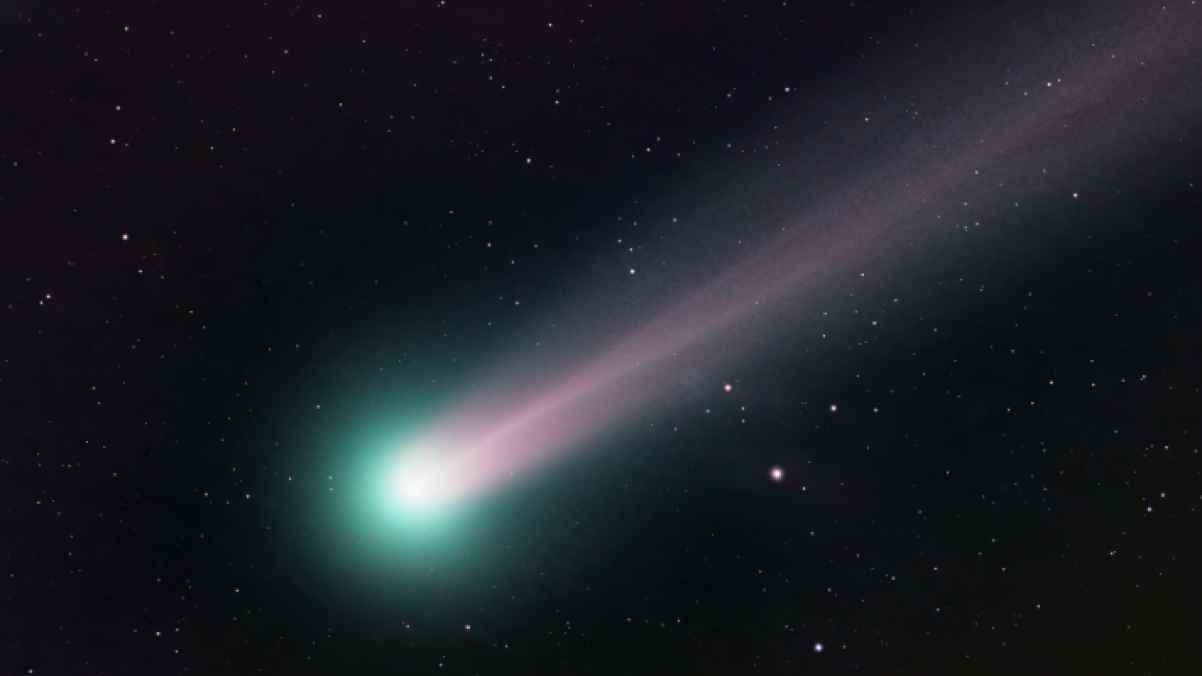
A new comet has begun appearing in the pre-dawn sky, with expectations that it may become visible to the naked eye in the coming days under suitable viewing conditions.
The comet, known as Pan-STARRS (C/2025 R3), was first detected on September 7, 2025 by the Pan-STARRS survey at the Haleakalā Observatory in Hawaii. It is estimated to take around 170,000 years to complete one orbit around the Sun, making it a rare celestial visitor seen only once over extremely long timescales.
The comet is currently showing a gradual increase in brightness, now approaching the threshold of naked-eye visibility in very dark skies, with forecasts suggesting it will become easier to spot during the coming days in the early morning hours.
It is expected to reach its closest point to the Sun on Sunday, April 19, at a safe distance of about half the Earth–Sun distance, increasing the likelihood that it will remain intact, unlike some comets that disintegrate during close solar approaches.
Its closest approach to Earth will occur on April 27, when it is expected to reach peak brightness, although it will no longer be visible from the Northern Hemisphere at that time.
At present, observers in the Northern Hemisphere can view it low on the eastern horizon roughly an hour and a half before sunrise until April 20, near the stars of the constellation Pegasus.
While it is theoretically near the limit of naked-eye visibility, bright morning twilight makes binoculars or short-exposure photography more effective, with the possibility of capturing a faint green-tinged tail.
This period also coincides with relatively darker skies as the Moon approaches its new phase on April 17, providing improved viewing conditions, provided the skies remain clear and free of clouds.