
200-Year-Old Shipwreck Found in Copenhagen Harbor
Note: AI technology was used to generate this article's audio.
- 19th century shipwrek discovered in Copenhagen
- Divers operate at 15 meters amid dense silt and low visibility
Marine archaeologists have uncovered the wreck of the Danish warship Danebrog at the bottom of Copenhagen Harbor, over 200 years after it sank at the hands of British Admiral Horatio Nelson and the Royal Navy.
Divers are working through thick layers of silt under nearly opaque waters at a depth of 15 meters, racing against time to expose the 19th-century wreck before the area is transformed into a construction site for a new residential district on the Danish coast.
The Viking Ship Museum in Denmark, leading months-long underwater excavations, announced the discovery on Thursday, coinciding with the 225th anniversary of the 1801 Battle of Copenhagen.
Johansen, one of the participating researchers, said: "Much has been written about the battle by enthusiastic eyewitnesses, but we don’t truly know what it felt like aboard a ship under fire from English guns. Perhaps examining the wreck can reveal details of that story."
During the battle, Nelson and the British fleet attacked the Danish navy and defeated its fleet, which had been acting as a defensive barrier for the harbor.
The violent clashes, lasting several hours, resulted in thousands of casualties and are considered one of Nelson’s “major battles.” The goal was to force Denmark out of the Northern European coalition, including Russia, Prussia, and Sweden.
The Danish ship Danebrog, commanded by Olefert Fischer, was at the heart of the battle and a primary target for Nelson. Cannon fire tore through its upper deck before incendiary shells set it ablaze.
Johansen added: "Being on that ship was like a nightmare. When a cannonball hits, the greatest damage isn’t from the ball itself but from the splintered wood flying everywhere."
The battle is also believed to have inspired the famous phrase “turn a blind eye,” as Nelson, who had lost sight in his right eye, ignored a signal from a superior officer, reportedly saying: "I have but one eye, and I have the right to be blind sometimes."
Nelson later offered a truce, which was agreed upon with Crown Prince Frederick of Denmark.
The damaged ship soon drifted north and exploded; records describe the sound of the blast echoing across Copenhagen.
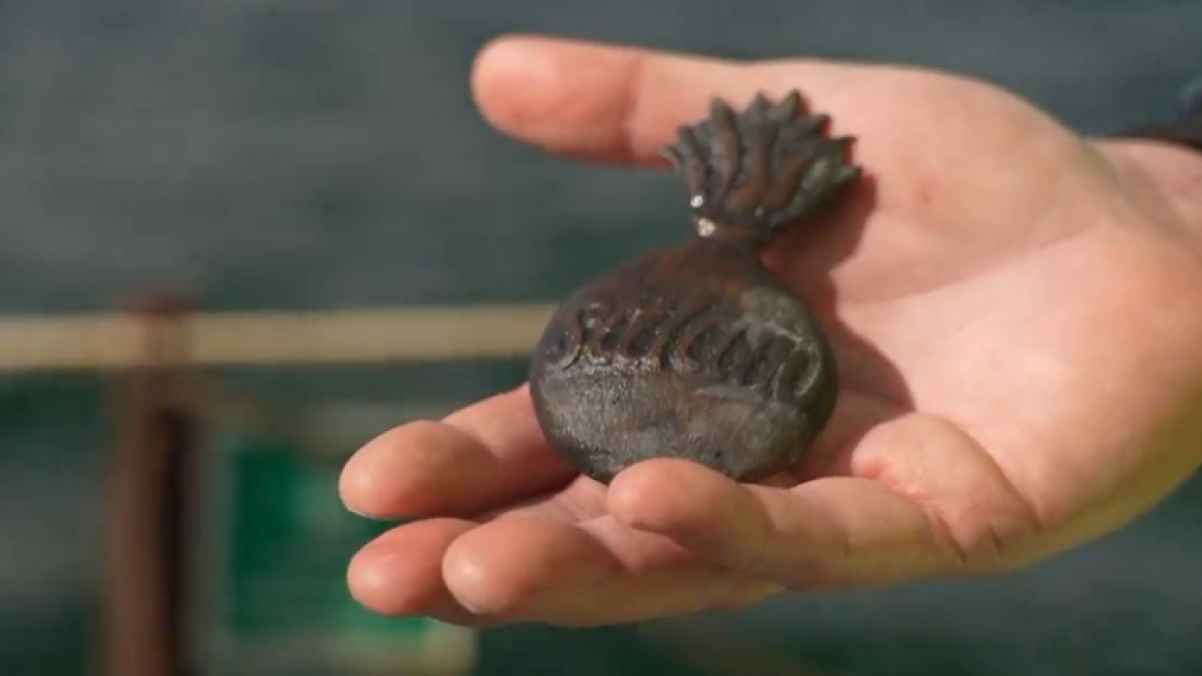
Marine archaeologists have recovered cannons, military uniforms, insignia, shoes, bottles, and even a fragment of a sailor’s jaw, possibly belonging to one of the 19 crew members lost in the battle.
The excavation site is expected to soon include construction for the Lynette Holm project, a large residential development in central Copenhagen Harbor, slated for completion by 2070.
Researchers began surveying the area late last year, targeting a site believed to mark the ship’s final position.
Experts confirmed that the sizes of the wooden fragments match old drawings, and tree-ring analysis indicates the year the ship was built.
The site is dark and filled with cannonballs, posing a risk to divers navigating the silt-laden waters.
Marine archaeologist and diver Mary Jensen said: "Sometimes you see nothing, and you have to feel your way with your fingers instead of your eyes."
The 1801 battle is a significant part of Denmark’s national history, documented in books and artwork. Archaeologists hope the discovery will help reconsider the events of the battle and perhaps uncover personal stories of those who fought 225 years ago.
Jensen added: "There are bottles, ceramic tools, and even basket fragments—these bring us closer to the people who were aboard the ship."