
A wave of strong solar flares threatens communication technologies
ملاحظة: النص المسموع ناتج عن نظام آلي
- Space Experts Monitor Satellite and Communication Disturbances
- Possible Northern Lights as Intense Solar Activity Continues
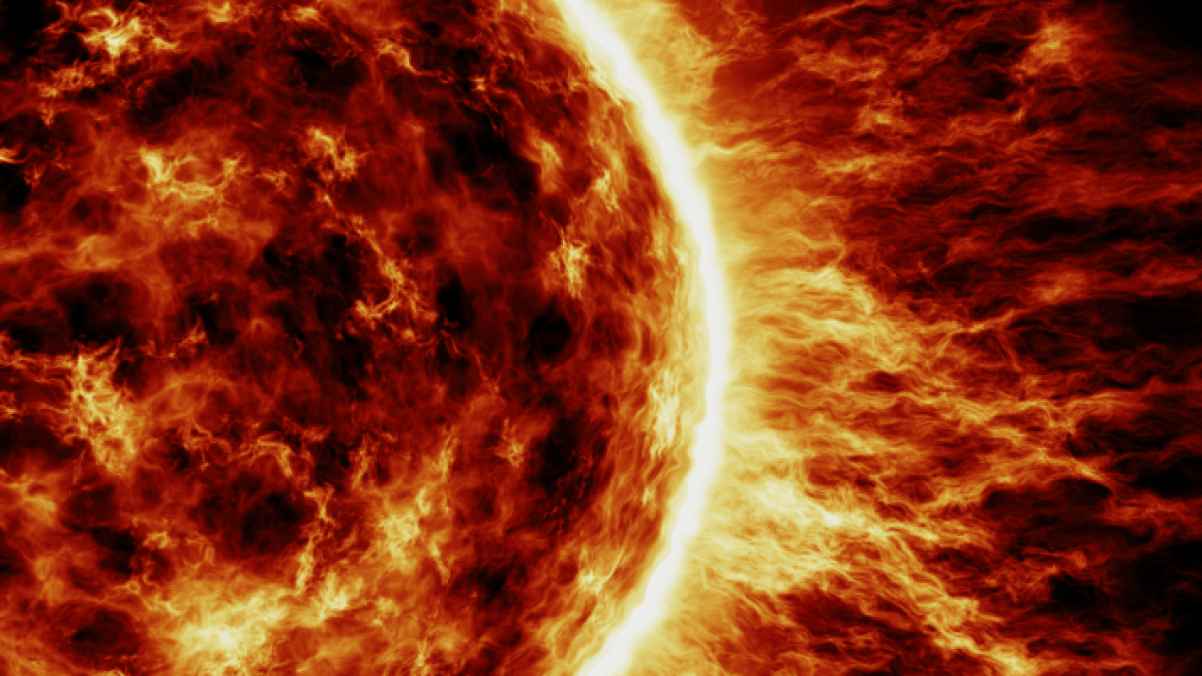
The Sun has released several strong solar flares in the past few days, putting space weather experts on alert to track potential northern lights displays and possible effects on satellites and communication systems.
NASA reported that the Sun emitted three strong solar flares on Sunday at 7:33 a.m., 6:37 p.m., and 7:36 p.m. ET, with a fourth flare occurring on Monday at 3:14 a.m. ET.
Solar flares are large bursts of electromagnetic radiation from the Sun that can last minutes or hours, often occurring in the Sun’s active regions marked by strong magnetic fields, typically associated with sunspots, according to the NOAA Space Weather Prediction Center.
All solar flares this week were classified as "X-class," the highest and most intense category, according to NASA.
The second flare on Sunday was an X8.1 event, the strongest in several years.
NOAA warned that the electromagnetic energy from such flares travels at the speed of light and may cause signal loss in high-frequency communication bands across most sunlit areas of Earth, with potential interruptions or major disruptions lasting several minutes to hours in affected regions.
Solar flares often precede coronal mass ejections (CMEs), massive bursts of solar material and magnetic fields from the Sun’s outer atmosphere.
When these flares interact with atoms and molecules in Earth’s atmosphere, northern lights can appear as glowing colors in the night sky.
Space weather experts emphasized that the visibility of the northern lights depends on the arrival of the CME, its magnetic orientation, and local cloud conditions.
The Sun’s magnetic field reached its solar maximum in October 2024 as part of its 11-year cycle. Since then, the Sun has continued to emit strong solar flares and geomagnetic storms, increasing the chances of northern lights. Intense magnetic activity from sunspots is expected to continue through 2026, according to NOAA.