
?Jordanian Scientist Omar Yaghi Makes Headlines Worldwide… But Who Is He
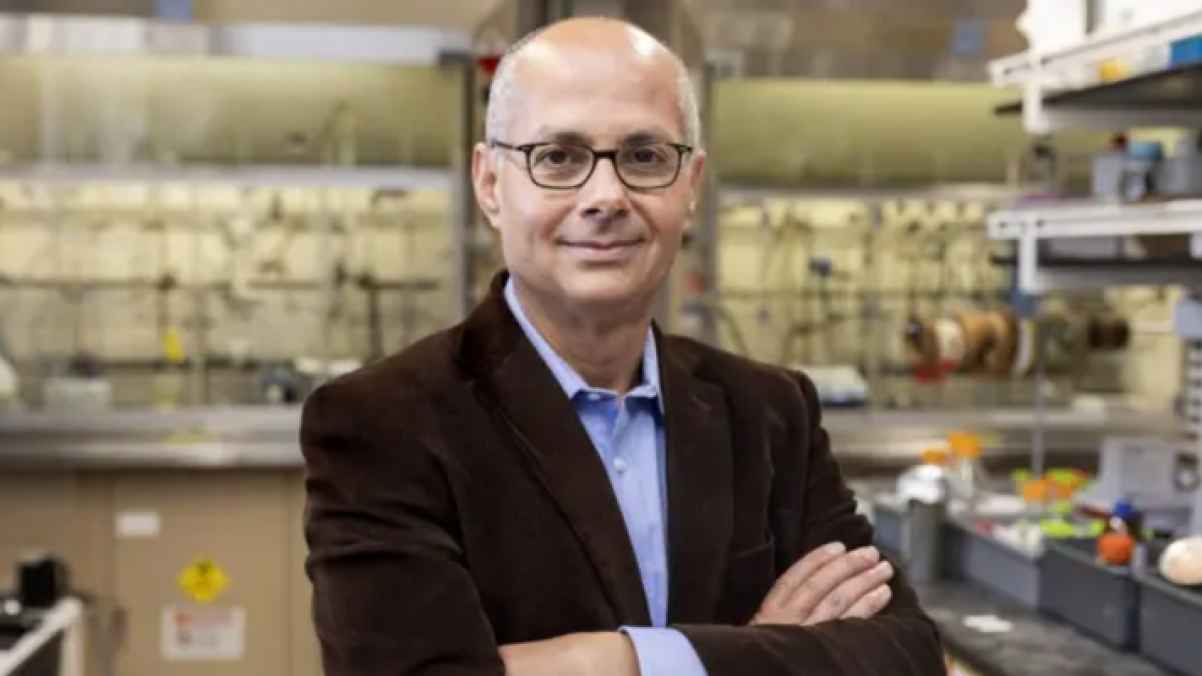
Today, he has become a symbol of Arab pride, a beacon to be emulated, and has captured the attention of global media for his professional and scientific achievements spanning many years—a moment truly worth remembering.
The Royal Swedish Academy of Sciences announced that Jordanian scientist Omar Mounis Yaghi has won the 2025 Nobel Prize in Chemistry, alongside scientists Susumu Kitagawa and Richard Robson, in recognition of their contributions to the development of Metal-Organic Frameworks (MOFs), which have opened wide-ranging possibilities in energy, environmental, and medical fields. This achievement crowns an exceptional scientific career, establishing Yaghi as one of the world’s leading chemists.
Omar Yaghi’s name has dominated search engines in recent hours, as people seek to learn more about his identity and the accomplishments that have made him a remarkable scientific figure.
Early Life and Academic Beginnings Omar Mounis Yaghi was born in Amman in 1965, of Palestinian descent. From a young age, he displayed a natural passion for science and a particular inclination toward chemistry and innovation. After completing his secondary education in Jordan, he moved to the United States to embark on his remarkable academic journey, starting at Hudson Valley Community College, then continuing at the University at Albany, where his outstanding performance earned him a Ph.D. in Chemistry in 1990 from the University of Illinois.
He then served as a research fellow at Harvard University from 1990 to 1992, paving the way for an academic career at some of the United States’ top universities, including the University of Arizona (1992–1998), the University of Michigan (1999–2006), UCLA (2007–2012), and the University of California, Berkeley (2012–present). He currently holds the James and Neeltje Tretter Chair in Chemistry at Berkeley, in addition to being a scientist at the Lawrence Berkeley National Laboratory and the founding director of the Berkeley Global Science Institute.
Omar Yaghi: Founder of Reticular Chemistry Yaghi is considered the founder of Reticular Chemistry, a modern branch of chemistry focused on connecting molecular building blocks to form precise, open frameworks known as Metal-Organic Frameworks (MOFs). These frameworks are used for gas storage, including hydrogen and carbon dioxide, air purification, water desalination, and clean energy technologies. This discovery revolutionized applied chemistry, making his research among the most cited in the world over the past two decades.
Awards and Scientific Achievements Yaghi has received dozens of prestigious awards, including:
- King Faisal International Prize in Chemistry (2015)
- Mustafa Prize in Nanoscience and Nanotechnology
- Albert Einstein World Award of Science
- First-Class Medal of Excellence from King Abdullah II (2017)
- Arab Genius Award (2024)
- Ranked second-best chemist in the world (2011)
He has also been elected to the U.S. National Academy of Sciences and the German National Academy of Sciences Leopoldina, was officially nominated for the Nobel Prize in 2015, and ultimately won it in 2025. The Nobel Committee recognized Yaghi, Kitagawa, and Robson for developing Metal-Organic Frameworks that transformed modern chemistry. The prize money of 11 million Swedish kronor (approximately $1.2 million) will be shared among the laureates at the ceremony in Stockholm.
Arab Recognition and National Pride Yaghi was granted Saudi citizenship in 2021 in recognition of his scientific achievements and pioneering research. He has been received by King Abdullah II on multiple occasions to honor his role in elevating the name of Jordan and the Arab world on the international stage.
This achievement represents global recognition of Arab scientific capabilities and highlights the Arab talent able to lead the advancement of global science.