
New archaeological discoveries in Egypt during excavation works – photos
Note: AI technology was used to generate this article's audio.
- Spanish archaeological mission uncovers Roman burial site in Minya
- Gold tongues and rare papyrus reveal burial rituals at Bahnasa
The Egyptian Ministry of Tourism and Antiquities announced that a Spanish archaeological mission has uncovered a Roman-era tomb in the Bahnasa area of Minya Governorate during ongoing excavations at the site.
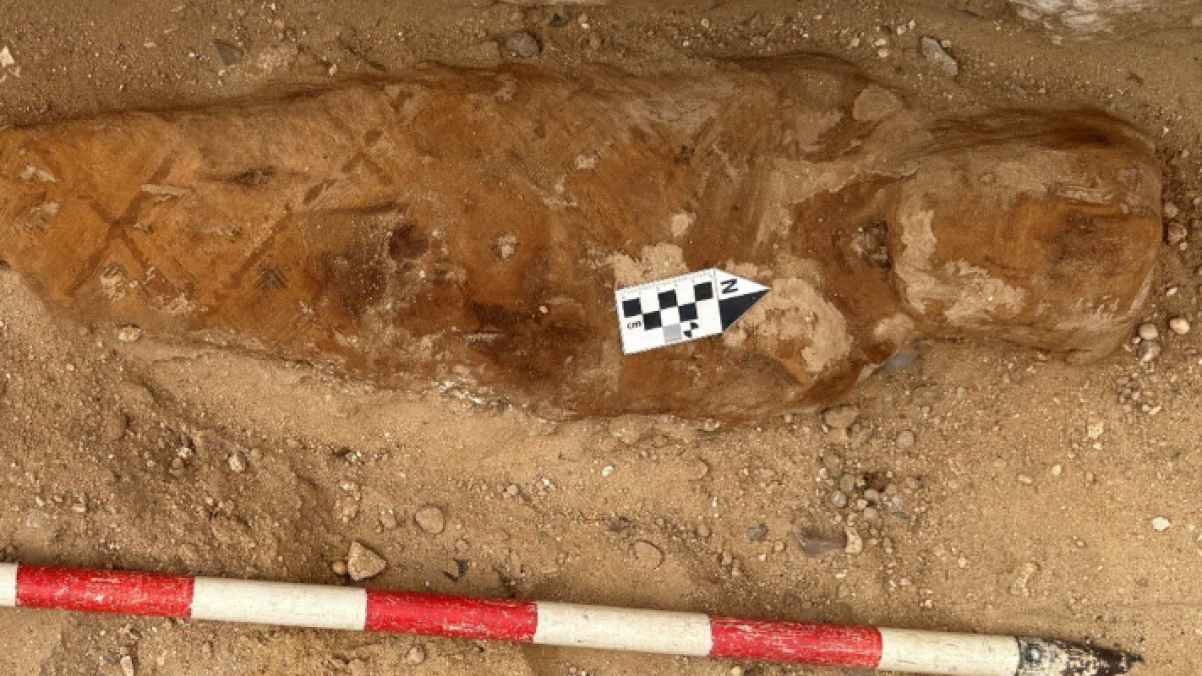
According to the ministry, the work revealed Roman mummies, some well preserved and wrapped in linen decorated with geometric patterns, along with wooden coffins.
Archaeologists also found gold and copper tongues placed inside the mouths of several mummies, in addition to traces of gold leaf used in decoration, reflecting distinctive funerary practices of the period.
Minister of Tourism and Antiquities Sherif Fathy praised the discovery, saying it adds to Minya’s growing list of archaeological finds and reflects the richness and diversity of Egyptian civilization across different historical eras.
The Secretary-General of the Supreme Council of Antiquities noted that the discovery offers a broader understanding of burial traditions in Bahnasa during the Greek and Roman periods, highlighting the recovery of a rare papyrus inside one mummy containing text from Homer’s Iliad, specifically the “Catalogue of Ships,” which adds both literary and historical significance to the site.
In a related development, excavations east of Tomb No. 67, discovered in the 2024 season, revealed a trench containing three limestone-built chambers, now largely in ruins.
One chamber contained a stone slab and a large jar holding cremated remains of an adult male, alongside an infant’s bones and a feline skull, all wrapped in textile fragments.
Another chamber held a similar jar with the remains of two burned individuals and additional animal bones, indicating varied burial practices at the site.
South of the area, small terracotta and bronze figurines were also uncovered, including depictions of the god Harpocrates as a mounted figure and a small statue of Cupid.
Further excavations at Tomb No. 65 revealed additional gold and copper tongues, Roman mummies, and painted wooden coffins inside an underground burial chamber (hypogeum), which was heavily damaged due to ancient looting.