
Gaza chants its joy over the ruins of pain on Palm Sunday
Note: AI technology was used to generate this article's audio.
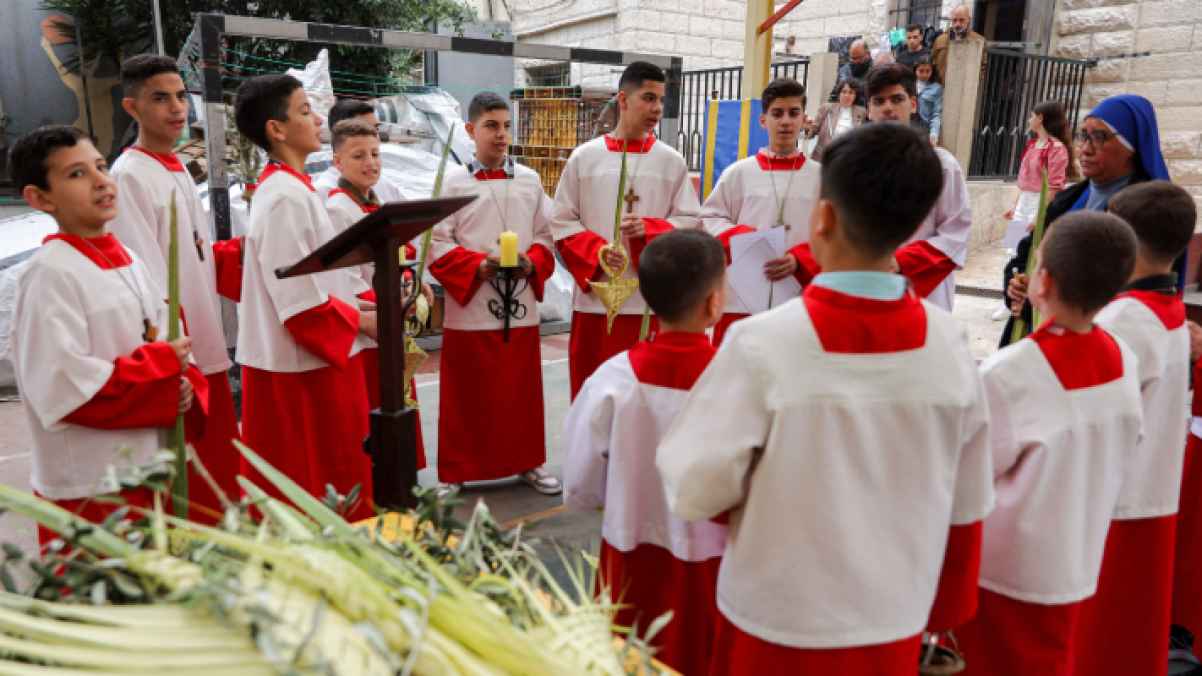
Christians of Gaza translate resilience in celebration of “Palm Sunday”. The children, despite the mix of fatigue and innocence, remain steadfast like men.
In a small corner of a city worn down by pain, incense rises like a visible prayer, carrying what remains of hope in people’s hearts. Inside the Church of the Holy Family in Gaza, souls gathered in the Palm Sunday mass—not as a passing ritual, but as a determined attempt to mend what is broken within and ignite a faint light in a long darkness.
The children, with features blending fatigue and innocence, arrived with hearts larger than their ages. On Palm Sunday, which is meant to be a day of joy, they drew shy smiles on faces burdened by reality, as if challenging harshness and creating small joy from nothing. They colored the moment with what little hope remained, despite loss, hunger, and deprivation.
A promise that the pain will not last.
The mothers, in simple clothes and weary eyes, stood watching the details of the scene in deep silence. On this day that symbolizes peace, their hearts were filled with painful stories of absence, yet they clung to faith as a lifeline, as if Palm Sunday were not just a memory, but a promise of light that pain will not last.
As for the men, they stood with fragile steadfastness, hiding their fractures behind distant gazes. They knew that reality is harsher than any ritual, yet on Palm Sunday, that moment of standing felt like a brief truce with life, a chance to catch their breath and hold onto what remains of resilience.
And so, between the scent of incense and whispered prayers on Palm Sunday, Gazans draw the outlines of a stubborn joy—not born from comfort, but from the heart of suffering. A fragile yet sincere joy slips through everything to say in deep silence: here, despite all that has happened, life still resists.