
Warning: Asteroid Could Strike the Moon on This Date
Note: AI technology was used to generate this article's audio.
- NASA and China warn of potential asteroid strike on the Moon in 2032
- Possible impact could disrupt satellites, navigation, and communications
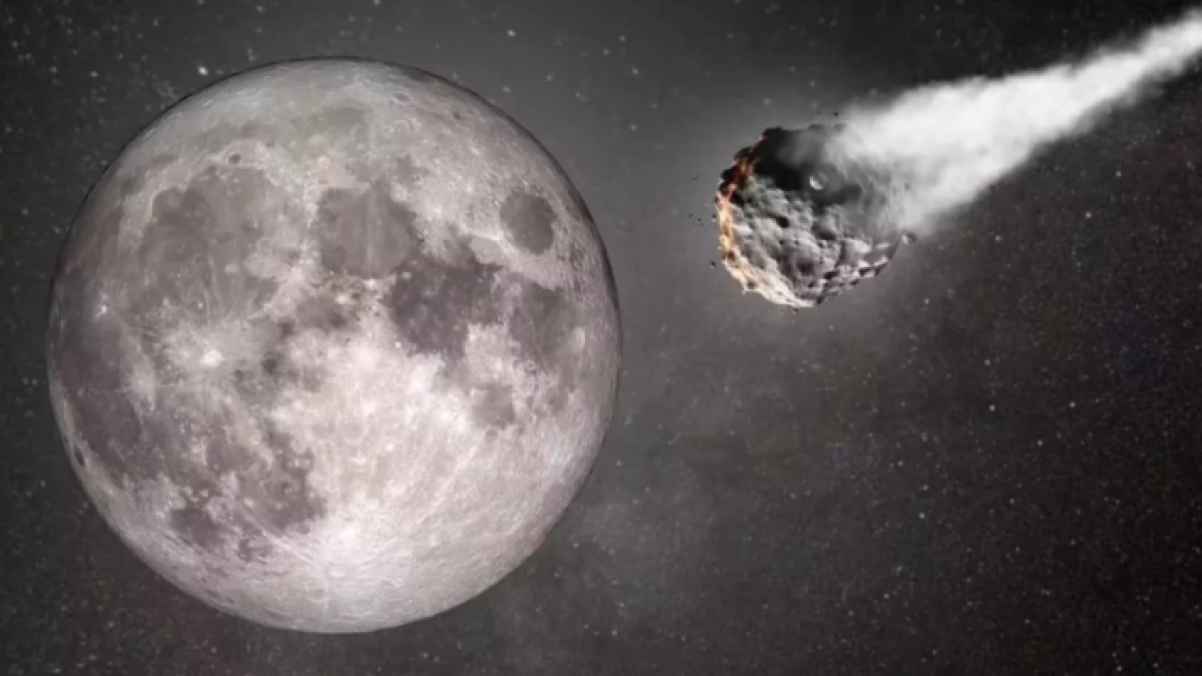
NASA and a research team from China’s Tsinghua University have warned that asteroid 2024 YR4, about 60 meters wide, has a small but real 4% chance of hitting the Moon on December 22, 2032, according to econews.
Although there is no direct threat to Earth, scientists say the impact could trigger major disruptions to satellites, air navigation systems, internet networks, and environmental monitoring.
Simulations indicate the collision could create a crater roughly 1 km wide, with an explosive energy comparable to a medium-sized nuclear blast, sending vast amounts of lunar rock into space. Some of this material could eventually fall to Earth as meteorites over the following months and years, mainly in sparsely populated desert regions such as South America, North Africa, and the Arabian Peninsula.
Researchers also warn of a massive meteor shower in Earth’s upper atmosphere, with millions of small particles per hour hitting the side facing Earth, while a few larger fragments could pose limited risk to the ground.
The biggest impact would be on satellites in low Earth orbit, which could face hundreds of high-speed strikes in a short time. This could damage solar panels, tear thermal blankets, and disrupt sensitive instruments, affecting internet, international communications, air travel, and Earth-observation satellites monitoring natural disasters.
Despite the low probability, the risk will be reassessed when the asteroid is visible again in 2028. Officials face a difficult choice: either intervene to divert the asteroid to protect satellites, or allow the impact to study a rare opportunity to collect pristine Moon rocks and observe a major lunar collision in real time.