
Meta” system allows users’ interactions to continue after death"
Note: AI technology was used to generate this article's audio.
- Meta secures patent for AI system that keeps accounts active after death
- The technology has not been launched, and there are no current plans to roll it out
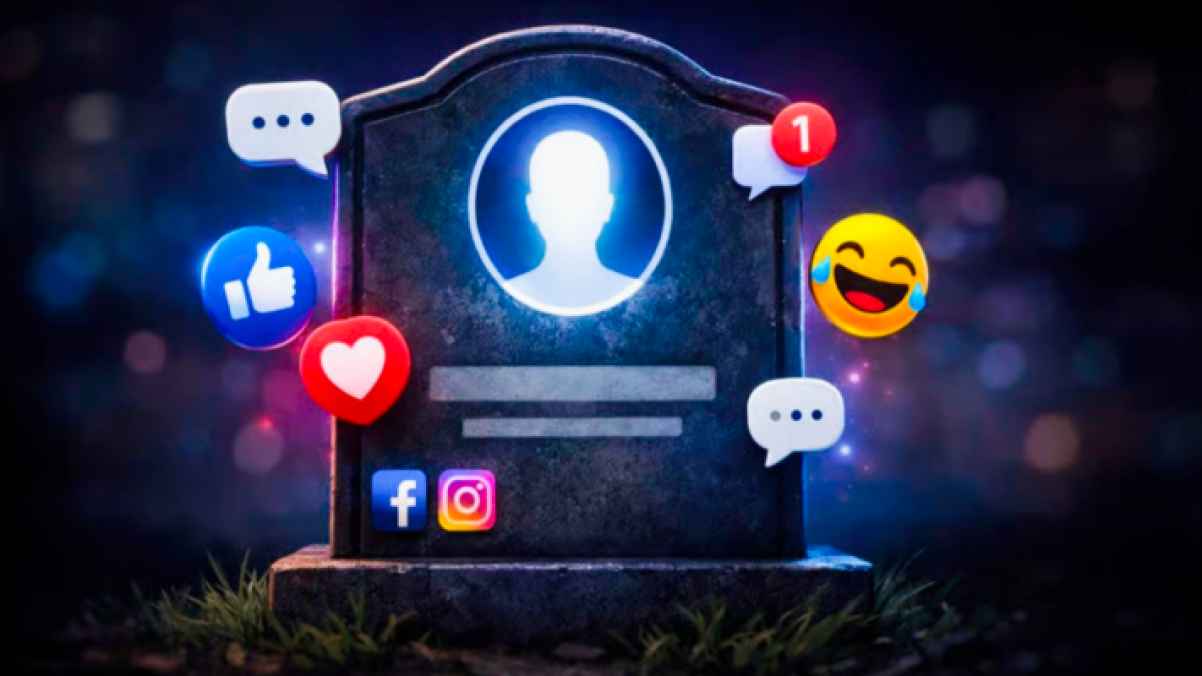
Meta has been granted a patent for an artificial intelligence system capable of simulating user activity, potentially allowing accounts to continue interacting even after the user has passed away.
The patent documents, granted in December, indicate that the system could be used if a user takes a long break or upon their death, enabling “immortal” accounts to respond to posts from living users in a way that mimics the original account holder’s behavior.
The system relies on a large language model that learns skills such as conversation by analyzing massive amounts of text. It can be trained on the user’s own data—including posts, comments, likes, chats, and even voice messages—allowing it to predict writing and speech patterns closely resembling the person.
The technology also opens the door to simulating voice and video through deepfake techniques, potentially letting friends and family hear the voices of deceased loved ones or make calls that appear as if they are present.
Meta first filed the patent in November 2023, set to remain valid until 2043. Andrew Bosworth, the company’s CTO, is listed as the primary author of the patent.
However, the company stressed that being granted the patent does not mean the technology will necessarily be developed or launched, noting there are currently no plans to pursue it.
This development comes amid growing interest in so-called “griefbots” or “deathbots,” technologies marketed as digital ways to memorialize and communicate with the deceased by simulating their personalities.
Users are often asked to upload voice recordings or messages from the deceased or describe their traits and favorite memories to build a model that mimics them.
Ethics experts warn of the risks in creating realistic simulations of the dead without clear safeguards, particularly regarding consent and digital rights.
In this context, Dr. Tomasz Hollanek, co-author of a study from the University of Cambridge, emphasized the importance of respecting the rights of those being digitally recreated as well as the rights of those interacting with the simulations.
Digital media lecturer Dr. Eva Nieto McAvoy described the rise of griefbots as both fascinating and unsettling, highlighting the rapid growth of AI technologies and their increasing ability to imitate human behavior.