
Ramadan knocks on Gaza’s doors, while hunger arrives before the iftar tables
Note: AI technology was used to generate this article's audio.
Painful scenes in Gaza stir emotions amid hunger Gaza will miss Ramadan tables under overwhelming sorrow
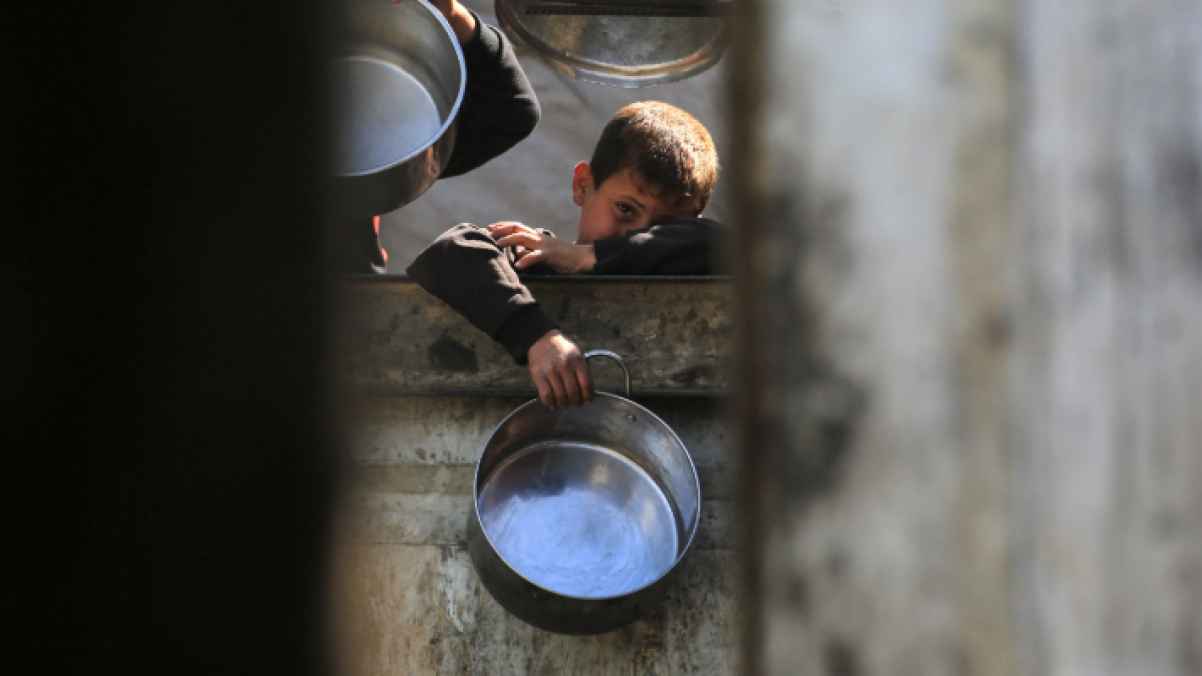
In the city of Khan Younis, in the south of the Gaza Strip, a small boy stands holding a cooking pot in front of a community kitchen, in a scene that captures the harshness of an ordinary day that has come to resemble yesterday and tomorrow. The child is not carrying a luxurious meal, but rather a fragile hope that this pot might contain something to ease his family’s hunger, in a reality that leaves no space for childhood or for long waiting at tables of safety.
While families around the world prepare to welcome the blessed month of Ramadan with joy—busy with setting tables, exchanging invitations, and gathering relatives—Gazans prepare in a different way: preparing to face another day in search of food, water, and medicine. The month of mercy has turned into a season of daily anxiety, and the rituals of preparation have shifted from shopping for necessities to standing in aid lines.
The Ramadan table in Gaza is no longer a symbol of blessing, but a headline for a battle for survival. Scarcity of food, shortages of clean water, and the absence of fuel have made even the simplest meal an achievement worth celebrating. Mothers hide their fear behind tired smiles, trying to convince their children that what is available today is enough, even if it is far less than what the body needs to grow and the soul needs to feel secure.
As the call to prayer echoes through the destroyed alleys, only hours of waiting separate Gazans from iftar—along with the fear that their homes may be completely empty of food. A harsh and difficult life has become the dominant headline of their daily reality, with no exceptions for young or old, and no room to catch one’s breath in a city accustomed to crises, yet never accustomed to this level of deprivation.
Thus, Ramadan enters Gaza weighed down by pain, and with it enter the hearts of Gazans, clinging to what remains of hope. Amid a bitter life imposed by cruel circumstances, human solidarity, community kitchens, and people’s generosity remain the last sources of warmth for the holy month—offering children, like that boy holding the pot, a small chance to believe that tomorrow may be kinder than today.