
When art becomes the voice of the displaced… Gaza paints its pain on the walls
Note: AI technology was used to generate this article's audio.
The exhibition came as a humanitarian platform to express the pain of Gazans.
The colors of the exhibition bleed with the harshness of life in Gaza under a witnessing sky.
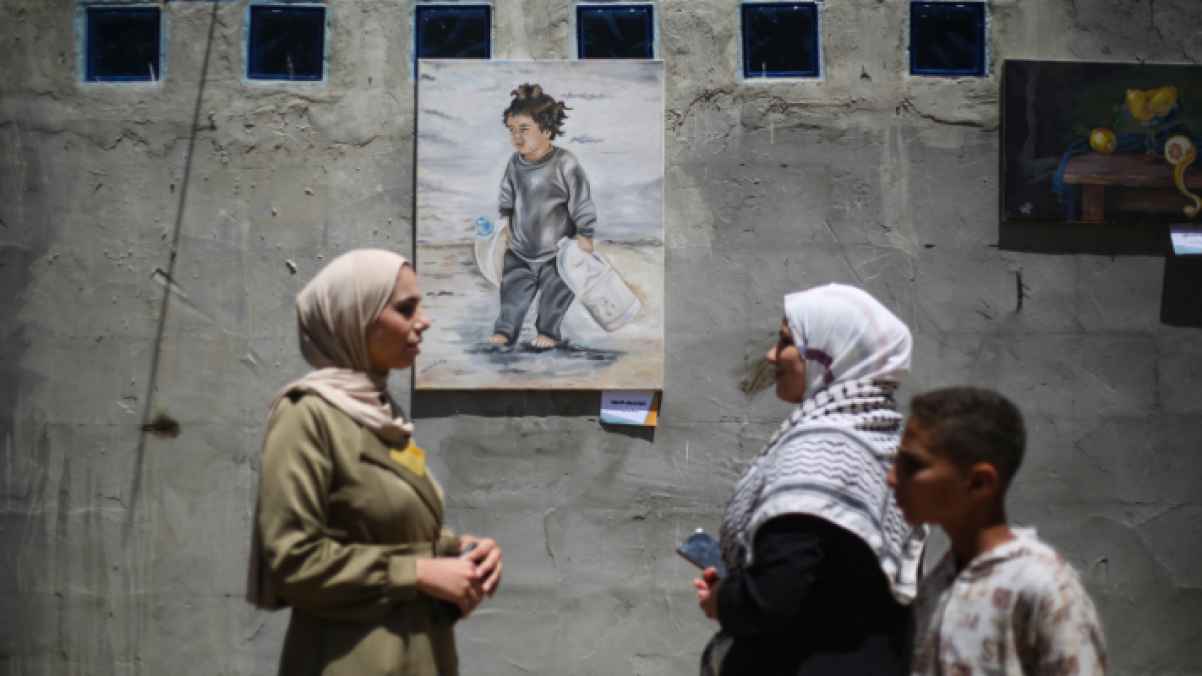
In the heart of Al-Bureij camp in the central Gaza Strip, among the tents that have become shelter for thousands of displaced families, artistic paintings rose in an open-air exhibition, giving the place different features and breaking some of the harshness of the daily scene. There, colors were not merely aesthetic details, but a language of life resisting the ashes.
The art exhibition came as a humanitarian and cultural platform through which Palestinians express their daily pain and their postponed dreams that war could not extinguish. Every painting carried a story, and every color was a living testimony to the suffering of a people who found in art a means of survival and resilience.
With the displacement of the majority of Gaza’s population, numbering around 2.4 million people, and the transformation of tents into a harsh reality imposing itself on the details of life, this exhibition became a space to breathe and a small window through which the displaced look at a glimpse of hope. Art here is no longer a luxury, but a psychological and spiritual necessity.
Visitors, including children, youth, and the elderly, stood before the paintings as if they were reading themselves within them. Some saw in the colors the memory of a lost home, while others found in them a silent message saying that life is still possible, even amid destruction and abandonment.
In Gaza, where the sounds of shelling mix with the sound of long waiting, art proves once again that it is more than just drawing; it is a soft resistance and a platform that tells the story as it is, without distortion. And among the tents, the exhibition remains a witness that the people who paint their pain still possess the ability to dream.