
Meta Signs Deal to Supply Solar Farms with Space-Based Energy at Night
Note: AI technology was used to generate this article's audio.
- Satellite project aims to sustain solar power generation during dark hours
- Move reflects rising demand for AI-driven energy across tech infrastructure
In a move reflecting intensifying competition over securing power for artificial intelligence systems, the company “Meta” has announced a partnership with a startup called “Overview Energy” to develop a space-based network designed to supply energy to data centers.
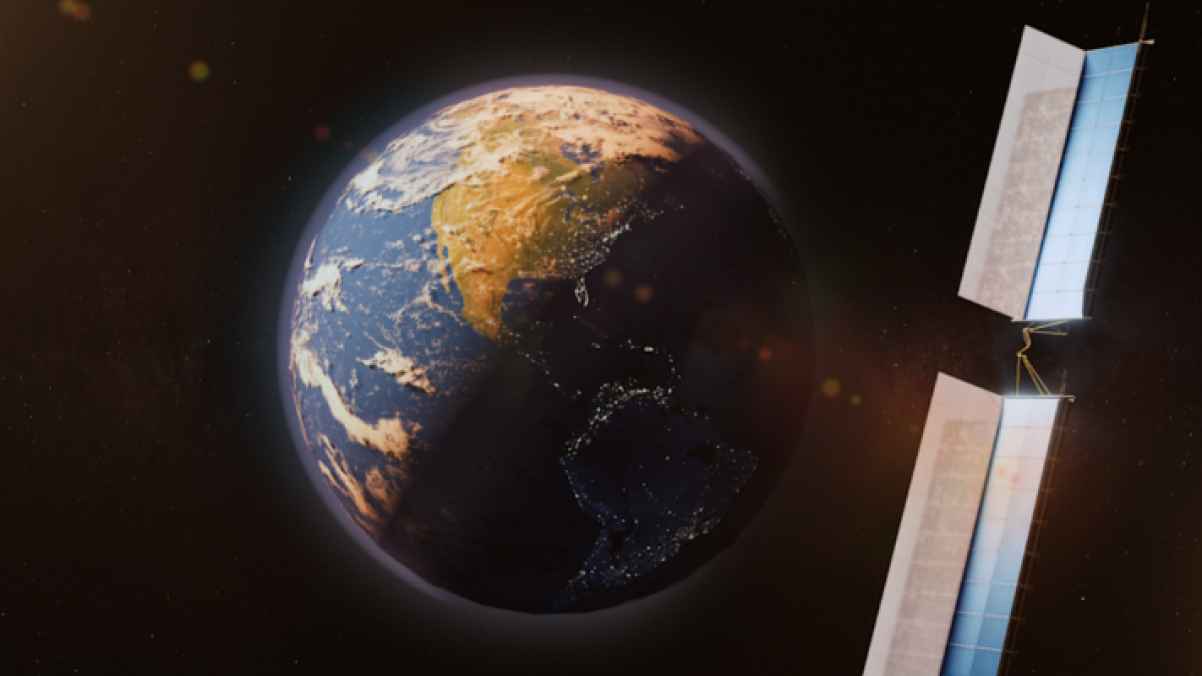
The agreement outlines a satellite constellation that would support solar electricity production during nighttime hours by capturing solar energy in space and transmitting it back to Earth.
Meta currently consumes massive amounts of electricity in its data centers, with usage exceeding 18,000 gigawatt-hours in 2024—enough to power around 1.7 million U.S. homes for a year—amid expectations of further growth as AI expands.
The company is also pursuing plans to develop 30 gigawatts of renewable energy capacity, with a strong focus on large-scale solar projects as part of efforts to reduce reliance on fossil fuels.
Unlike conventional approaches that rely on battery storage or alternative grid sources to cover nighttime demand, the proposed system uses satellites to collect solar energy and convert it into a form of light transmitted back to large solar farms on Earth.
The startup says the approach could bypass some of the technical and regulatory challenges linked to traditional space-based energy transmission methods, while maintaining safe levels of beam intensity.
According to the company, early tests of energy transfer from the atmosphere have already been carried out using experimental aircraft, with plans to launch the first low-orbit satellite in 2028 for in-space power transmission trials.
Under the agreement, Meta will gain access to up to one gigawatt of energy from the system, while the startup introduces a new measurement unit called “megawatt photons” to quantify transmitted light used in electricity generation.
Overview Energy plans to begin deploying its satellites in 2030, aiming for a network of around 1,000 spacecraft in geostationary orbit, each operating for more than a decade.
Once fully deployed, the system is expected to cover roughly one-third of the planet’s surface, enabling continuous solar support as Earth rotates, from the western United States to Western Europe.
The companies say the integration of generation and transmission in a single system could reshape global energy markets, allowing electricity to be directed where demand is highest in real time.
As the company’s CEO put it, “there is a big difference between operating in one energy market and operating across all energy markets at the same time.”