
A wedding amid the ruins of war.. Gaza declares the triumph of life
Note: AI technology was used to generate this article's audio.
“Dress of Joy 2” — a fabric of happiness and a message of resilience to the world Weddings in Gaza despite war stand as a prominent symbol in a land of pride
Amid the rubble left by war, and between destroyed homes and streets weighed down by absence, the people of Gaza continue to cling to life as if they are writing a new chapter of patience and determination every day. There, where destruction tries to steal the shape of days, Gazans insist that hope must remain, and that their souls stay tied to life no matter how fierce the storms become.
In Gaza, strength is not measured by what a person owns, but by the ability to rise after every collapse. Every destroyed home leaves behind a heart still beating, and every fallen tear carries an endless story of patience. Its people do not wait for miracles from the sky; instead, they create their own small miracles each morning when they decide to continue despite everything.
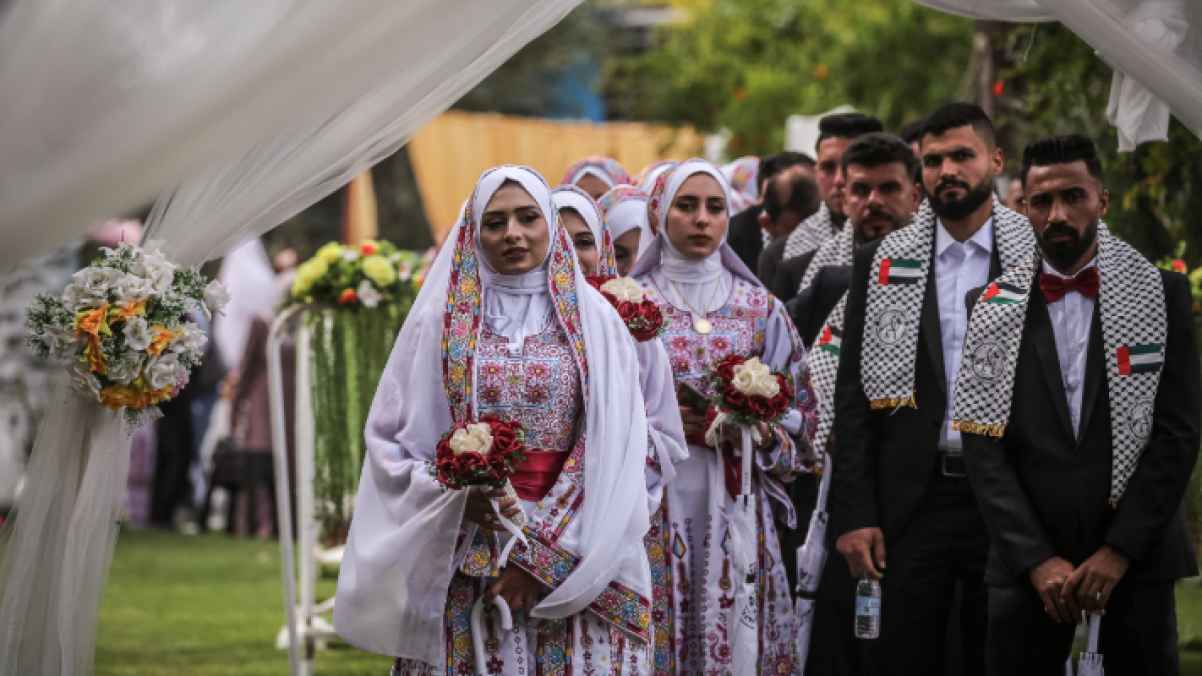
Among these powerful human scenes came the mass wedding ceremony “Dress of Joy 2” in Deir al-Balah in the central Gaza Strip, becoming an exceptional moment carrying many silent messages. Around 300 brides and grooms gathered to declare that love does not die, and that joy is not postponed until wars end, but is born from pain itself and from the stones that everyone thought had ended the story.
The occasion was not merely a collective wedding; it was a clear declaration that life is stronger than death, and that dreams are not easily defeated. The grooms who arrived with hearts full of hope, and the brides who wore joy before wearing their dresses, presented an image that summarizes Gaza itself — a place that knows how to smile even while bleeding.
The groom standing on a simple decorated car was not celebrating alone; he was carrying the joy of an entire city searching for a window of light. The bride walking steadily toward her future seemed to say that war may delay details, but it cannot kill dreams or prevent new beginnings.
The ululations that filled the place were not just fleeting sounds of joy; they were messages of defiance against sorrow and a collective declaration that Gazans are still capable of creating happiness on top of the ruins. Every smile there was a small victory, and every simple dance was silent resistance in the face of fear and destruction.
This humanitarian event was not only a social occasion but an act of Palestinian resilience, as young people chose to begin their lives despite bombardment and to build new families in a time lacking the most basic elements of safety. “Dress of Joy 2” stood as proof that Palestinians do not wait for perfect conditions to live; they create new opportunities for life out of pain itself.
Thus Gaza remains a city that does not know surrender, teaching the world that humans can plant hope even in the harshest places. Between the sound of shelling and the sound of ululations, the most beautiful meaning of life prevails: to continue, to love, and to believe that after all this pain, joy must come — even from beneath the rubble.