
Predictions of a large asteroid passing near Earth without posing a threat
Note: AI technology was used to generate this article's audio.
- Asteroid Apophis to pass Earth on April 13, 2029 at a distance of around 32,000 km
- NASA confirms no collision risk despite unprecedented close approach
Earth prepares for rare flyby of a major asteroid event closely monitored by astronomers, with NASA confirming that the object known as 99942 Apophis will safely pass Earth without any impact risk, though at an exceptionally close distance by space standards.
According to estimates, the asteroid will pass just about 32,000 km from Earth’s surface in 2029, making it one of the closest large space objects ever recorded in modern history.
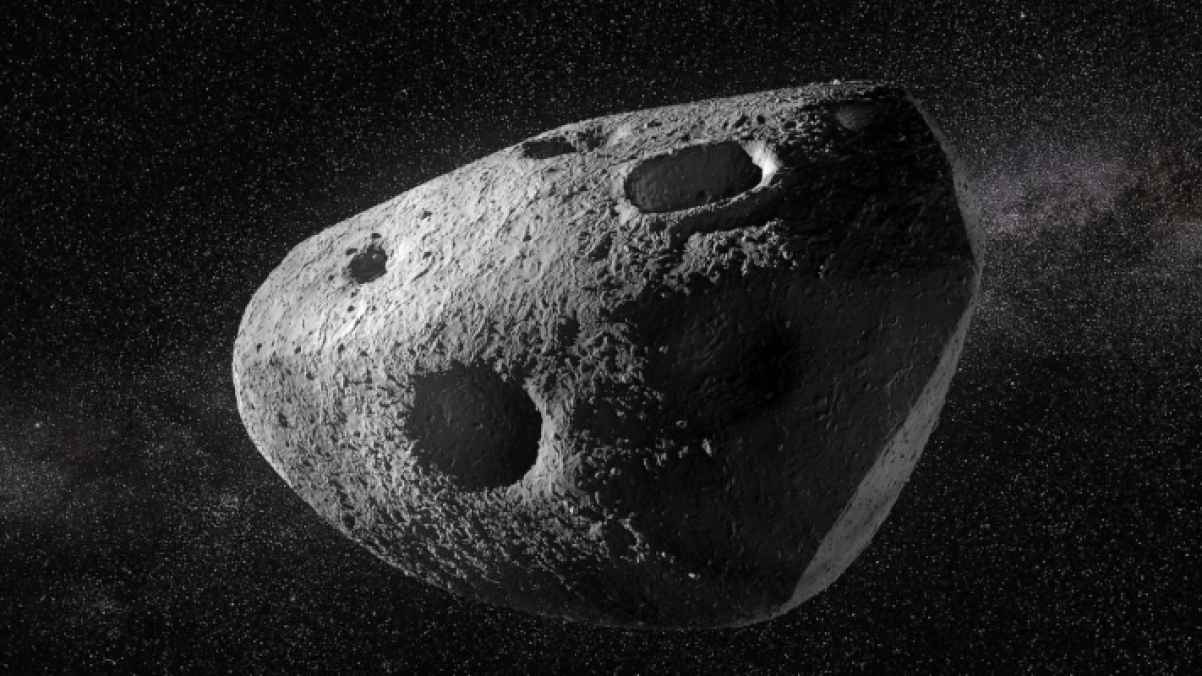
Apophis is about 340 meters wide, making it a massive rocky asteroid composed of silicate materials mixed with iron and nickel, believed to be a remnant from the early solar system formed around 4.6 billion years ago.
Although it was initially considered a potential threat after its discovery in 2004 for possible encounters in 2029, 2036, and 2068, precise tracking has since confirmed it poses no impact danger for at least the next century.
The close approach on April 13, 2029 is expected to be a major scientific and public event, with the asteroid potentially visible to the naked eye in parts of the Eastern Hemisphere, weather permitting and without telescopes.
NASA notes that such an event is extremely rare, occurring only once every few thousand years, which explains the strong global scientific interest.
Scientists also expect Earth’s gravity to slightly influence the asteroid during its flyby, potentially causing minor changes in its rotation or surface, such as small rockslides.
As part of the observation effort, NASA’s OSIRIS-APEX spacecraft will approach the asteroid after its passage to study the changes it experienced, while the European Space Agency plans to launch the “Ramses” mission to accompany it during its closest approach.
Researchers hope these missions will provide a rare opportunity to better understand the internal structure of near-Earth objects and how they respond to planetary gravity under such exceptional conditions.