
Archaeological cave under British castle reveals “rare” prehistoric evidence
Note: AI technology was used to generate this article's audio.
- New excavations are preparing to uncover buried historical layers beneath an ancient archaeological site
- Early studies have already revealed human and animal remains dating back tens of thousands of years
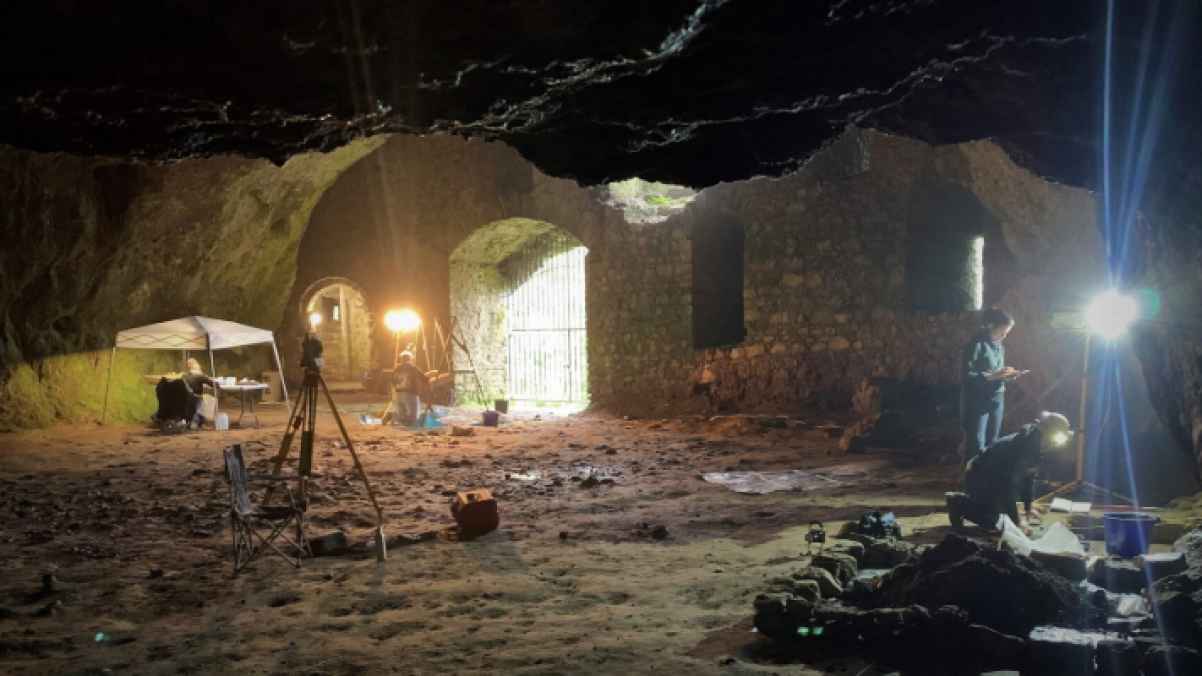
Researchers are gearing up to launch a large-scale excavation project in a vast archaeological cave located beneath Pembroke Castle in Wales, following discoveries described as potentially rewriting part of Britain’s prehistoric record.
Archaeologists say the cave, known as “Wogan” (Wogan Cavern) and situated beneath an 11th-century castle, has yielded extremely rare evidence of humans and animals inhabiting the area more than 100,000 years ago. Among the finds are hippopotamus bones, indicating that the species once lived in Wales during a warm climatic phase around 120,000 years ago.
According to the research team, limited excavations carried out between 2021 and 2024 also uncovered stone tools and remains of extinct animals such as mammoths and woolly rhinoceroses, making the site one of the most significant potential archaeological archives in Britain.
Researchers describe the cave as a “once-in-a-lifetime discovery,” noting that it is large and extensive, measuring about 23 meters in length and up to 10 meters in height, and was previously believed to have lost most of its archaeological contents.
Dr. Rob Dinnis from the University of Aberdeen, who leads the project, said: “There is no comparable site in Britain, and what we have found so far is truly exceptional. We are excited about what the upcoming excavations may reveal about the lives of early humans and how they adapted to climate change over tens of thousands of years.”
The scientific team hopes the cave will reveal a long sequence of human presence, stretching from the post–last ice age period around 11,500 years ago back to humans in Britain around 45,000 years ago, and possibly even older traces.
Meanwhile, Pembroke Castle management said the discovery marks an exciting new chapter in the castle’s history, known as the birthplace of Henry VII, adding that excavation results will be preserved and displayed inside the castle.
Full-scale excavation work is scheduled to begin at the end of next May, in a five-year project involving researchers from the University of Aberdeen in collaboration with the Pembroke Castle Trust.