
Messages on the walls… a people resisting with certainty amid wounds.
Note: AI technology was used to generate this article's audio.
Gaza: Lines of Resilience in the Chronicle of History Gaza’s Pain: Lessons to the World in the Meaning of Patience
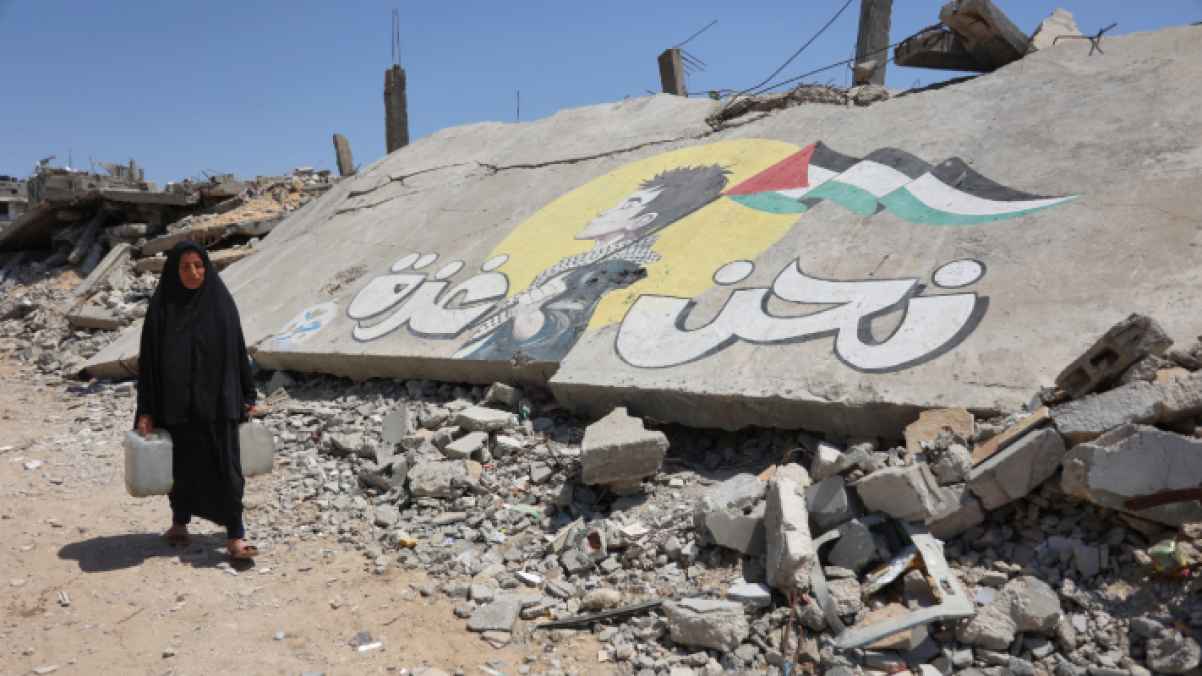
In Gaza, walls are no longer mere blocks of silent concrete; they have transformed into open notebooks telling stories of pain and resilience together. Between the cracks left by shelling, words written spontaneously pulse with life, carrying unbearable pain and unbreakable hope. It is as if the city, in all its being, decided to speak when voices could no longer express.
Along the shattered alleys, phrases appear like a living heartbeat that refuses to fade: “Victory from God and a near conquest.” Words repeated on the walls as though they are a promise echoing in people’s hearts before being written in ink. They are not just letters, but messages infused with mothers’ tears, strengthening fathers’ resolve, and offering children a sense of reassurance amid the rubble.
A Testimony of a Moment The walls there carry the features of those who passed and the voices of those who are gone. Every inscription is a testimony to a moment—of loss or survival, of a long wait that never seems to end. Some are written with trembling hands, others with striking firmness, yet they all converge on one meaning: we are here, despite everything.
In this scene, ink becomes a means of resistance, and words an unseen weapon. People write to remain, to tell the world that life is still resisting in its smallest details. Even the cracked walls seem to refuse to fall, just to keep these messages alive—witnesses to a harsh time that has not extinguished faith.
Thus, in Gaza, life is not measured by what is lost, but by what remains of the ability to dream. The walls that spoke did not utter despair; instead, they whispered a deep hope that transcends pain. Between every phrase and another, one echo persists: no matter how severe the wounds, a dawn must eventually be born.