
Countdown Begins for NASA’s Historic “Artemis 2” Mission
Note: AI technology was used to generate this article's audio.
- NASA begins countdown for a manned mission around the moon
- "Artemis 2" tests Orion systems ahead of future Moon landing
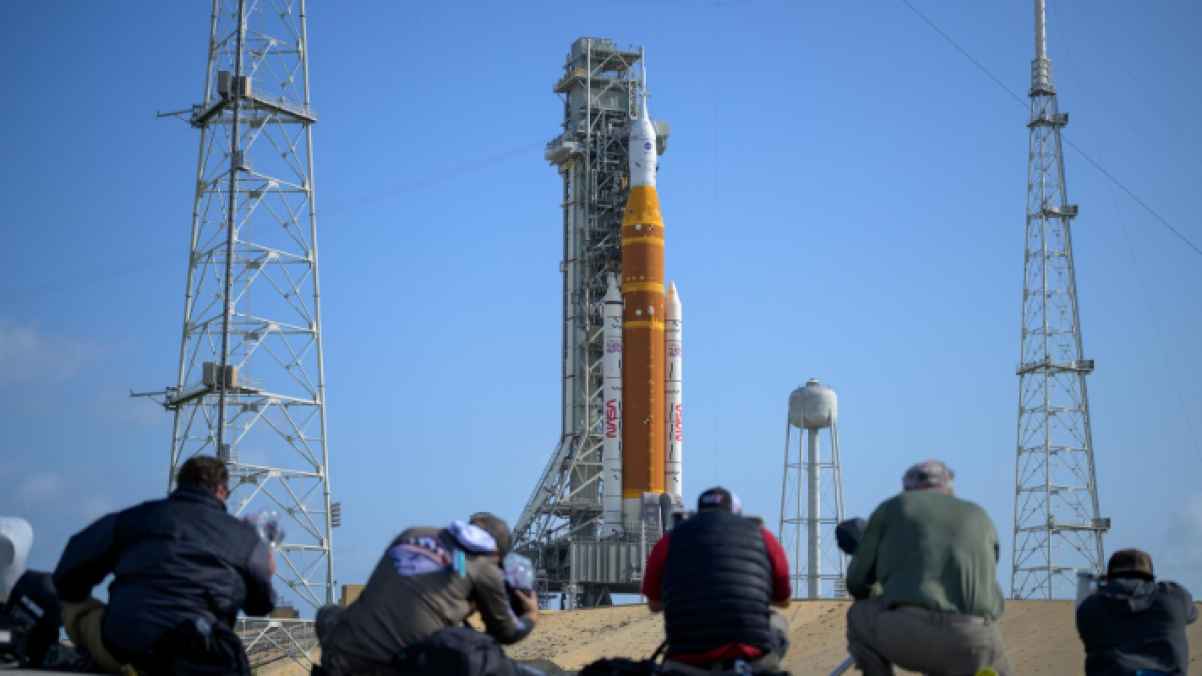
The U.S. space agency (NASA) announced the start of the historic countdown for the "Artemis 2" mission.
This marks the first test of the Space Launch System (SLS) rocket and the manned Orion spacecraft, bringing humanity to the brink of returning around the moon for the first time in over half a century.
The countdown clock started at Kennedy Space Center in Florida, with the launch team targeting 6:24 PM on Wednesday, April 1.
The SLS rocket, the most powerful of its kind in the world, is set to lift off from Launch Pad 39B, carrying four astronauts inside the advanced Orion capsule.
This operation is part of NASA’s ambitious Artemis program.
The "Artemis 2" mission aims to test all life-support and manual-control systems aboard Orion while the crew experiences deep-space conditions.
This ten-day journey will serve as the final test before progressing to actual lunar landing missions in the future.
During the mission, the spacecraft will orbit Earth twice to raise its trajectory before entering the free-return path that will take the crew to the far side of the Moon, thousands of kilometers above its surface, and then back to Earth using the Moon’s natural gravity.
The mission is led by astronaut Reid Wiseman, accompanied by pilot Victor Glover, along with Christina Koch and Jeremy Hansen from the Canadian Space Agency.
"Artemis 2" represents the bridge between the success of the uncrewed "Artemis 1" mission conducted years ago and NASA’s ultimate goal of building the Lunar Gateway and a permanent Moon base.
Space experts see this countdown not merely as preparation for a test flight but as an official declaration of the resumption of long-range manned missions, halted since the Apollo program ended in 1972, paving the way for future crewed missions to Mars.
NASA engineering and meteorology teams have confirmed that all technical systems are functioning efficiently, with an ideal launch window and favorable weather forecasts. Meanwhile, the global scientific community eagerly awaits liftoff, which promises to rewrite records of human achievement in space exploration.