
New Dinosaur Species Discovered in the Sahara
Note: AI technology was used to generate this article's audio.
- Scientific expedition unearths tons of predatory dinosaur remains
- New study reveals details of unprecedented skeleton
A research team from the University of Chicago has announced the discovery of a previously unknown dinosaur species in Niger, West Africa — a breakthrough scientists say offers a rare glimpse into prehistoric life.
Led by American paleontologist Paul Sereno, the 20-member team excavated the fossil of a new species of spinosaur in a remote region of the Sahara Desert.
The expedition followed a grueling journey to an isolated site, but the findings exceeded expectations. The excavation yielded a major scientific discovery that provides fresh insight into the ancient ecosystem this predator once inhabited.
The idea for the mission stemmed from a single line in a book by French geologist Hughes Four, a pioneer in Quaternary studies, which prompted Sereno to explore an area known as “Jingueyibi.”
Sereno first visited the site in 2019, where, with the help of a local guide, he uncovered parts of the dinosaur’s jaw. The Covid-19 pandemic delayed further work until 2022, when the team returned to complete the excavation and secure the landmark find.
Researchers collected nearly 50 tons of fossilized bones under harsh desert conditions — an unprecedented haul for this type of dinosaur.
The findings were published last week in a scientific journal, with the newly identified species named Spinosaurus mirabilis, meaning “the astonishing spinosaur.”
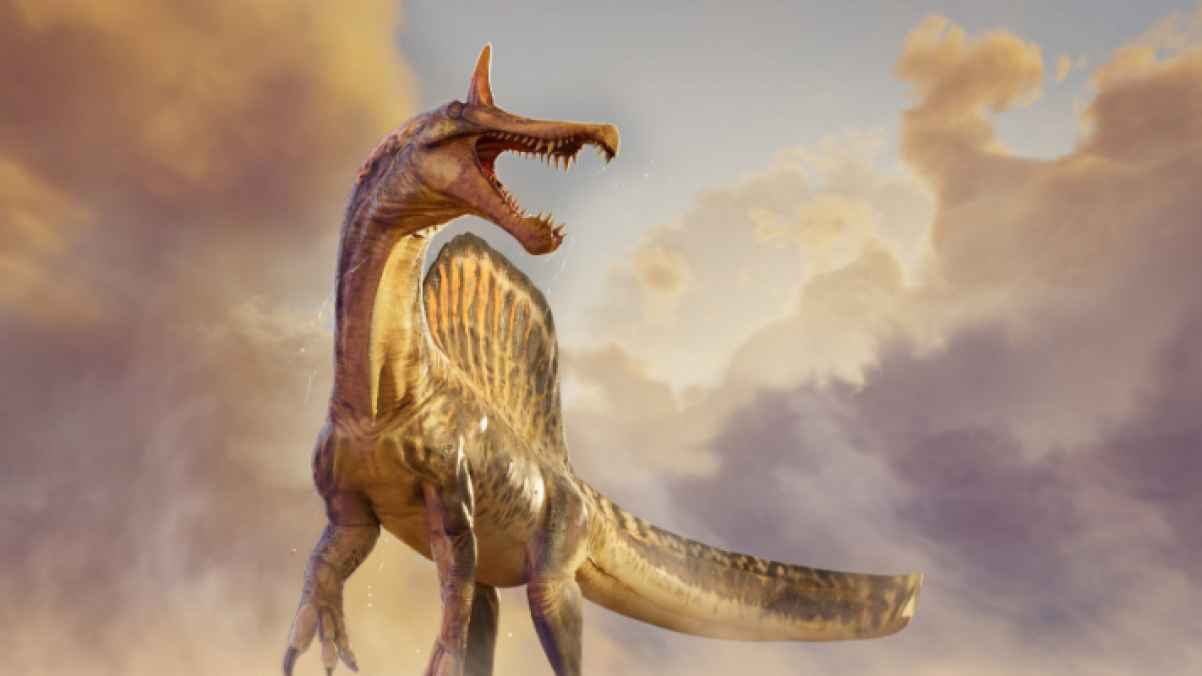
Sereno said the team quickly realized they were dealing with a unique skeletal structure, highlighted by a distinctive curved, sword-like crest atop the skull. He described the moment as extraordinary, noting that no comparable remains of this scale have been found since 1915.
The dinosaur is believed to have been fish-eating, equipped with a prominent crest and long claws. Estimates suggest it may have used its forelimbs more powerfully than Tyrannosaurus rex, particularly when tearing apart prey.
Researchers believe the animal was suddenly buried by river flooding, a scenario that led to both its death and the remarkable preservation of its remains.
Advanced techniques, including CT scanning, were used to reconstruct the skeleton with precision.
Reconstructed models of the skull and crest of Spinosaurus mirabilis are set to go on display at the Chicago Children’s Museum beginning March 1.