
They share crumbs… harsh scenes that break hearts in Gaza
Note: AI technology was used to generate this article's audio.
Painful scenes that break hearts in Gaza Ramadan in Gaza… the strength of a people who believe in destiny
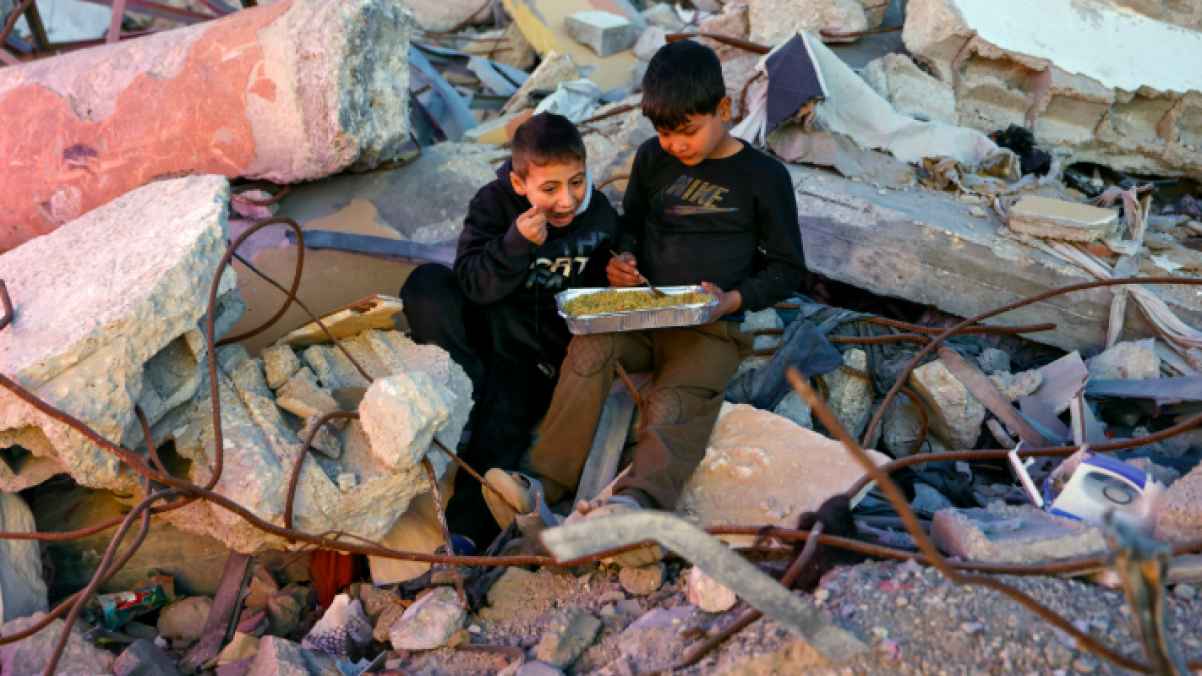
In a scene that captures both the agony of the place and the resilience of its people, Palestinian boys share a few bites of iftar at a communal table amid the rubble of destroyed buildings in the embattled city.
Among scattered debris and the remains of collapsed homes, the little food available looks like a message of life, affirming that the spirit of solidarity is still stronger than the devastation surrounding the city.
With the arrival of the blessed month of Ramadan, hope is renewed in the hearts of Gazans, despite the hunger that has become part of their daily lives. In many neighborhoods, iftar tables lack even the simplest dishes, and families are forced to make do with limited aid or very modest meals that do not meet the needs of children or the elderly, at a time when feelings of helplessness grow in the face of basic living requirements.
A bitter reality Hunger in Gaza is no longer an emergency condition, but a daily reality that accompanies those who fast from the early morning hours until the call to sunset prayer. Many families wait for iftar with anxiety and fear rather than joy and preparation, as in other countries. The question about the time of the call to prayer is preceded by a harsher one: What will we put on the table today?
The pain of poverty and deprivation deepens during this holy month, when children see Ramadan lanterns hanging along destroyed streets, while their families are unable to buy bread or provide suhoor needs. The few flashes of joy that shine in the narrow alleys do not hide the heavy reality; instead, they reveal the sharp contrast between the spirit of Ramadan—based on generosity and reassurance—and a harsh life imposed by poverty, siege, and destruction.
Despite all of this, Gazans continue to cling to hope, creating moments of human warmth through communal iftar tables that make up for a part of their great loss. In Gaza, hunger is not resisted by food alone, but by solidarity, patience, and faith that this month—no matter how painful it becomes—will remain a space of mercy and serenity in hearts exhausted by deprivation.