
Portuguese FA Breaks Silence on Vinícius–Brestiani Controversy
ملاحظة: النص المسموع ناتج عن نظام آلي
- The case reignites debate over tackling racism in European football, balancing clear moral condemnation with the challenge of legal proof
The Portuguese Football Federation has stepped into the heated dispute between Real Madrid star Vinícius Júnior and Benfica’s Argentine player Gianluca Prestiani, following the controversial incident during their UEFA Champions League Round of 16 playoff clash.
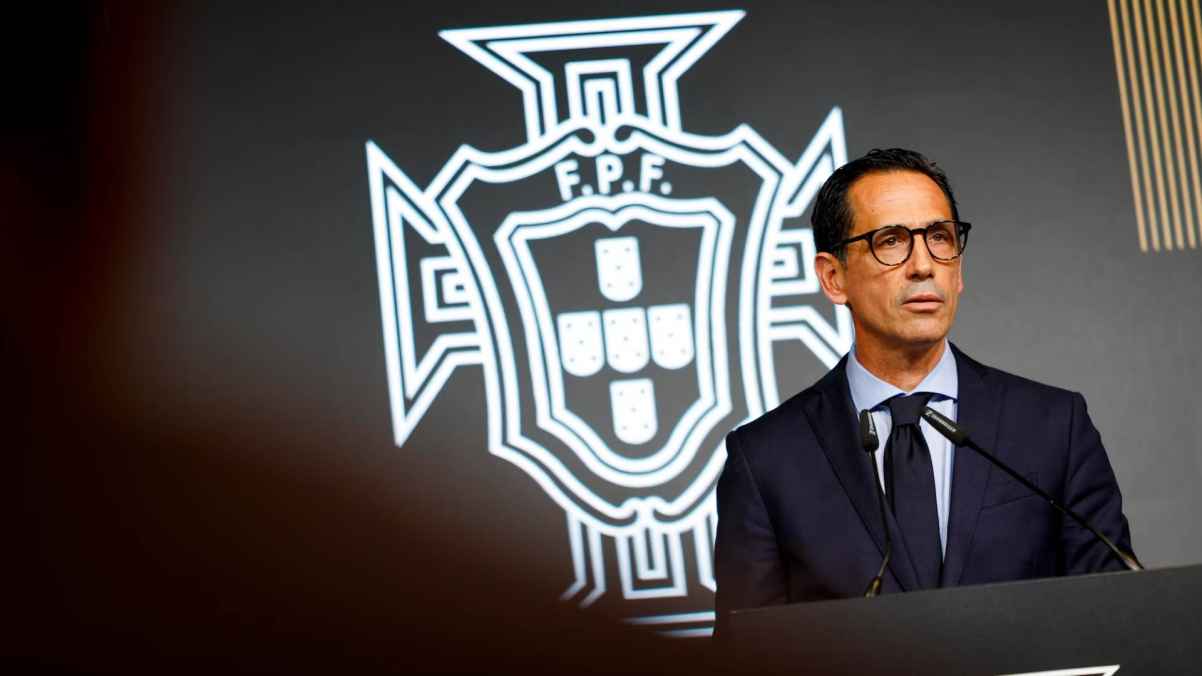
Tony Oliveira, senior official at the Portuguese federation and former Benfica player, stressed that racism is “absolutely unacceptable,” noting that while he was present at the stadium, he lacks precise details of what occurred between the players. He added that any confirmed racist behavior cannot be justified under any circumstances.
What happened in Lisbon?
The incident erupted after Vinícius scored the match’s only goal. He celebrated in front of Benfica fans and then got into a verbal exchange with Prestiani. The Brazilian immediately approached the referee, who halted the game and activated the anti-racism protocol before resuming play.
Benfica responded by releasing a video suggesting it’s difficult to determine exactly what was said, given unclear footage and the player covering his mouth while speaking.
Three-step protocol
The referee followed FIFA’s established anti-racism procedures, signaling a formal warning by crossing both arms in an “X” shape.
Sanctions escalate through three stages:
-
Temporary suspension of the match with a formal warning.
-
Partial stadium evacuation and suspension if repeated.
-
Match abandonment if offensive behavior continues.
Upcoming UEFA investigation
The matter is now awaiting action from UEFA, which is expected to open an official investigation, hearing from all parties involved. Any potential sanction will require clear evidence to definitively prove the incident.
The case brings renewed focus on the mechanisms for combating racism in European stadiums, highlighting the gap between strong moral condemnation and the difficulty of legal proof, as calls grow for stricter measures to protect players.