
Bitter cold over the tents… Gazans chase a flicker of warmth in the open air
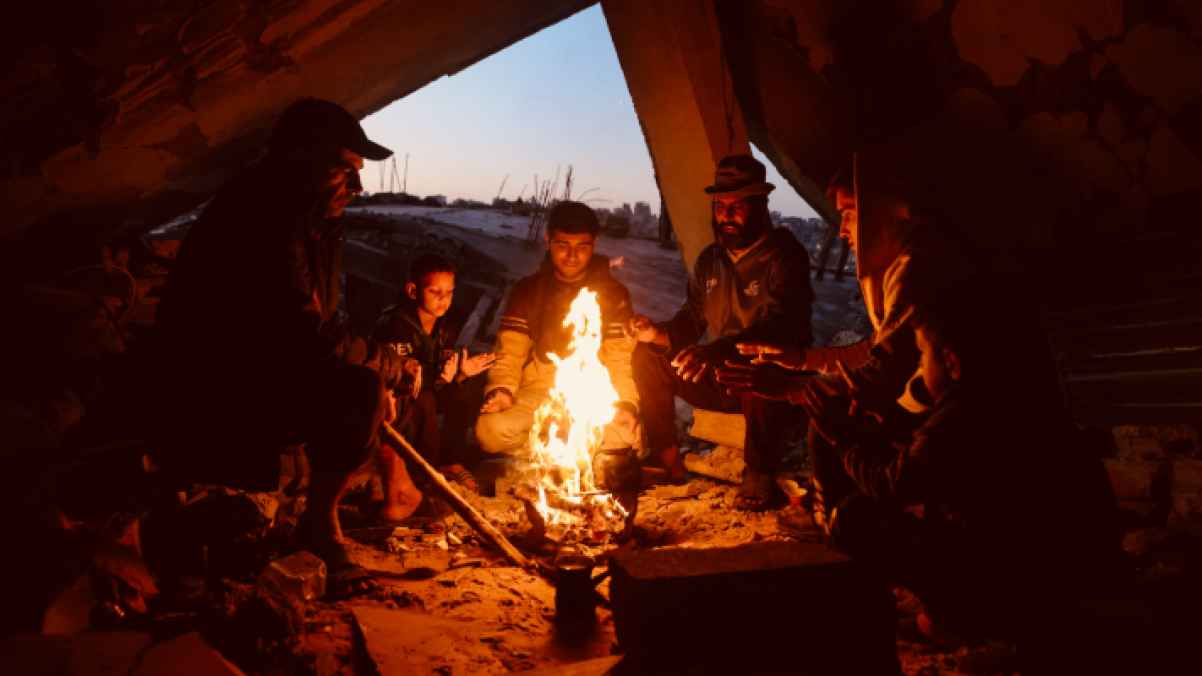
The cold invades the Strip as thousands remain displaced in the open Gazans search for warmth amid scarce resources
In the exhausted Gaza Strip, the bitter cold imposes its harsh presence on tens of thousands of families who lost their homes and found no refuge except worn-out tents that protect neither from heat nor cold. With every night in which winter descends heavily, the suffering of the displaced doubles as they face the stormy weather with the simplest tools and almost nonexistent means. The tent that gathers the family has become a burden against merciless winds, and the thin sheets of nylon can no longer stop the rain that seeps through their folds.
Under this painful reality, men, women, and children gather around small fires they ignite using broken pieces of wood, worn-out furniture, or remnants of flammable materials collected from the rubble. The fire, once a symbol of warmth, has become a difficult means of survival, preserved with great effort because it is the only refuge during nights when temperatures drop dangerously low. Some families burn what remains of their belongings, just to offer their children a little warmth before the frost overtakes them.
Harsh scenes
In the overcrowded camps, the trembling voices of children pleading for more warmth can be heard, while mothers try to cover them with worn-out clothing that is far from enough to face such a violent winter. Many children sleep on damp ground, laying on the few blankets that have not yet fallen apart. With each cold wave, illnesses among the elderly and children increase amid a severe shortage of medicine and medical care.
As for the men, they roam between the tents and the open areas searching for anything that can fuel another fire—gathering branches, wood, or even plastic despite its danger. The equation has become brutal: either warmth polluted by smoke or cold that may claim lives. Everyone knows these fires are merely temporary rescue, yet they remain the only option in the absence of electricity, fuel, and basic heating supplies.
Despite this heavy darkness, the spirit of resilience still appears in small daily details: in a mother sharing her blanket with the neighbor’s children, in a father lighting a fire for multiple families, and in the youth trying to repair tents threatened by the rain. This is Gaza, which always teaches the world how life can continue even under the weight of cold, suffering, and deprivation—and how a human being can still create warmth from the heart of ashes.