
Millions of Bees Discovered Beneath Cemetery in United States
Note: AI technology was used to generate this article's audio.
- Study reveals unusually dense population of ground-dwelling bees beneath an old historic site
- Findings highlight the ecological value of unconventional habitats for pollination and biodiversity
Researchers at Cornell University have found that a cemetery in New York State may host nearly 5.6 million ground-nesting bees living underground, making it one of the largest known colonies of its kind, and possibly one of the oldest.
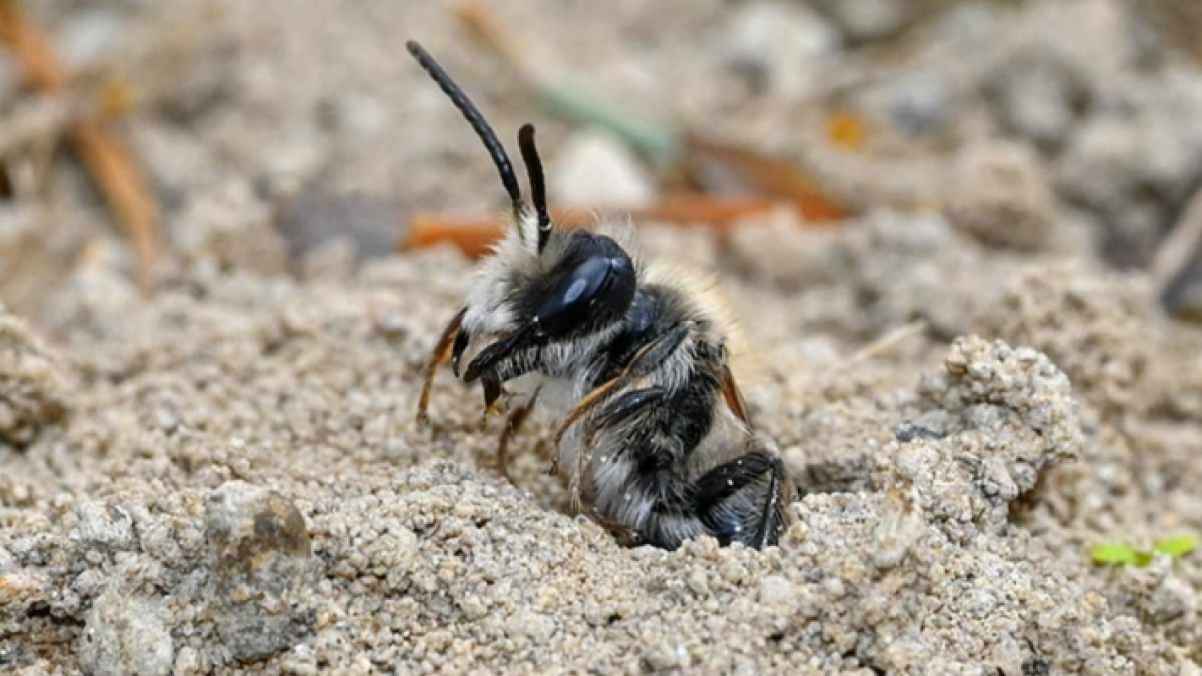
A separate study shows that the bees belong to a species known as ground-dwelling bees, which dig into soil for nesting rather than forming traditional above-ground hives, unlike social bee species that live in large colonies.
Scientists have confirmed that this species has been present at the cemetery site for decades, with records dating back to the 1930s, although its full population size had never been measured before.
During a field study lasting several weeks, the research team collected samples from different locations around the cemetery to estimate the scale of the underground colony.
Results suggest that around 5.56 million bees were active in foraging and reproduction within a relatively small area, a figure considered extraordinary compared to typical bee colonies.
Researchers say cemeteries may provide a stable and undisturbed environment suitable for such insects, making them unexpectedly important habitats for pollination and ecosystem balance.
Scientists also emphasize that solitary and ground-nesting bees are often overlooked, despite playing a crucial role in supporting biodiversity in natural systems.