
"Best Spots to View the Upcoming "Blood Moon
Note: AI technology was used to generate this article's audio.
- The Moon will turn a deep red on March 3, 2026
- The phenomenon will be visible in selected regions due to the total lunar eclipse
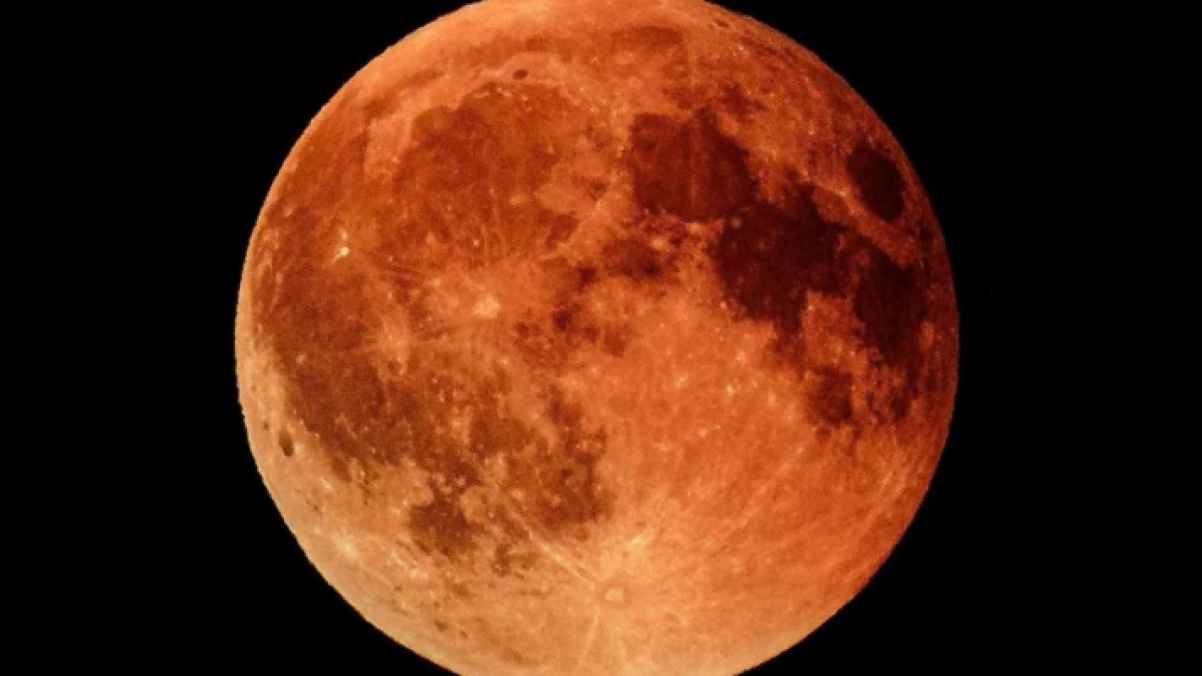
On March 3, 2026, the world will witness a total lunar eclipse, known as a "Blood Moon," during which the Moon takes on a dark red hue.
North America is among the best locations to observe this astronomical event.
The eclipse will also be visible over the Pacific Ocean, Australia, and East Asia, while Europe and Africa will not see it.
A total lunar eclipse is one of the most striking celestial events, resulting from the regular motions of both Earth and the Moon around the Sun.
The Moon orbits Earth, while Earth orbits the Sun, creating multiple alignments among the three bodies throughout the month.
A lunar eclipse occurs when the Moon is positioned opposite the Sun relative to Earth, casting Earth’s shadow onto the lunar surface.
This alignment coincides with a full Moon, when the Moon’s Earth-facing side is fully illuminated by sunlight.
Although full Moons occur roughly every month, lunar eclipses are less frequent because the Sun, Earth, and Moon must align precisely for Earth’s shadow to cover the Moon.
Sometimes the shadow passes above or below the Moon, preventing an eclipse.
When Earth’s shadow covers part of the Moon, a partial eclipse occurs; if it covers the Moon entirely, a total eclipse takes place.
A total lunar eclipse is called a "Blood Moon" because the Moon appears dark red.
Earth’s atmosphere acts as a filter, scattering shorter wavelengths like blue light, while longer wavelengths such as red and orange pass through and illuminate the Moon, giving it its characteristic color during the eclipse.
Unlike a solar eclipse, a lunar eclipse can be safely observed with the naked eye, making it accessible and safe for all age groups.