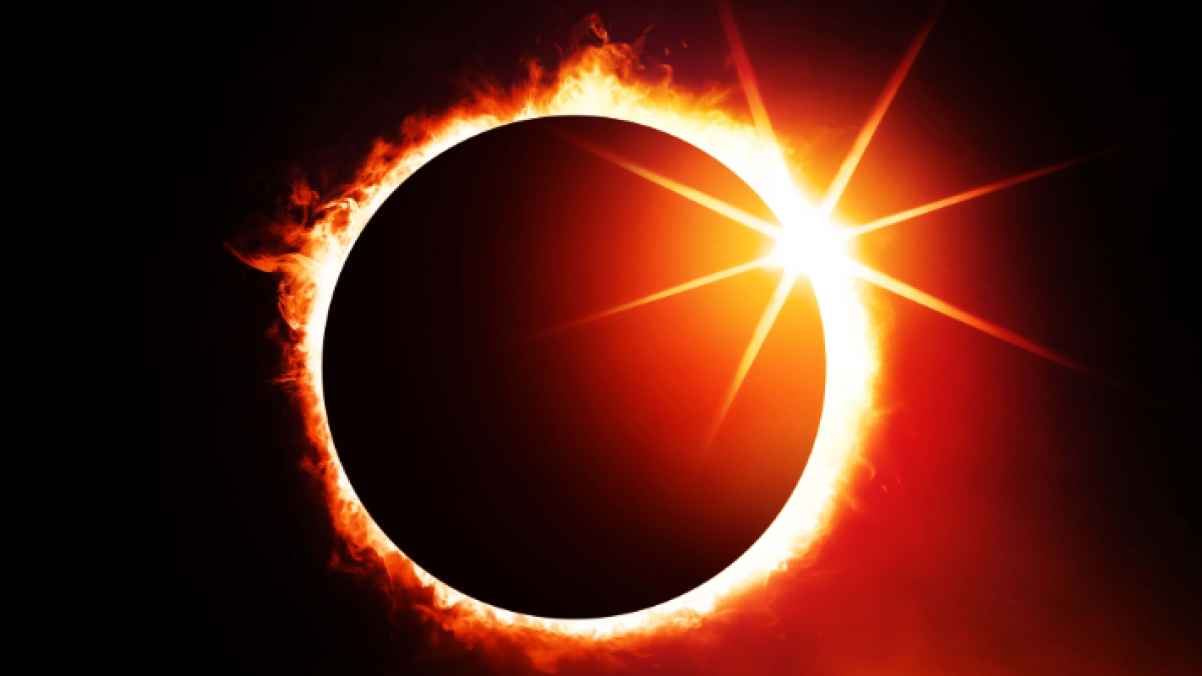
- The first solar eclipse of 2026 will appear as a "Ring of Fire"
- The full ring will only be visible in a remote part of Antarctica
The sky will witness on Tuesday, February 17, 2026, the first solar eclipse of the year, known as the "Ring of Fire." It occurs when the Moon passes between the Earth and the Sun during the new moon, but appears slightly smaller than the Sun, leaving a glowing halo around the Sun’s edges.
The annular phase is expected to last up to 2 minutes and 20 seconds.
A solar eclipse happens when the Moon aligns precisely between the Earth and the Sun during a new moon.
In an annular eclipse, the Moon does not cover the Sun completely but appears slightly smaller, forming the famous "Ring of Fire."
According to NASA, this eclipse will block about 96% of the Sun’s center, leaving a glowing edge around it.
Later in 2026, the world will witness a total solar eclipse over parts of Greenland, Iceland, and northern Spain, coinciding with the peak of the annual Perseid meteor shower.
The full "Ring of Fire" will only appear in a remote region of Antarctica, where a limited number of research stations and observers will be able to see it.
For most residents of the Northern Hemisphere, no part of the eclipse will be visible, as the Sun will remain below the horizon during the event.
A partial eclipse will be visible from southern Africa and parts of South America.