
In Gaza… the Eid takbeers are louder and stronger than the sound of shelling
Note: AI technology was used to generate this article's audio.
Gaza Performs Eid al-Adha Prayers on the Ruins of Painful Memories Gazans Create Happiness with Determination and Willpower Amid the Harshness of Pain
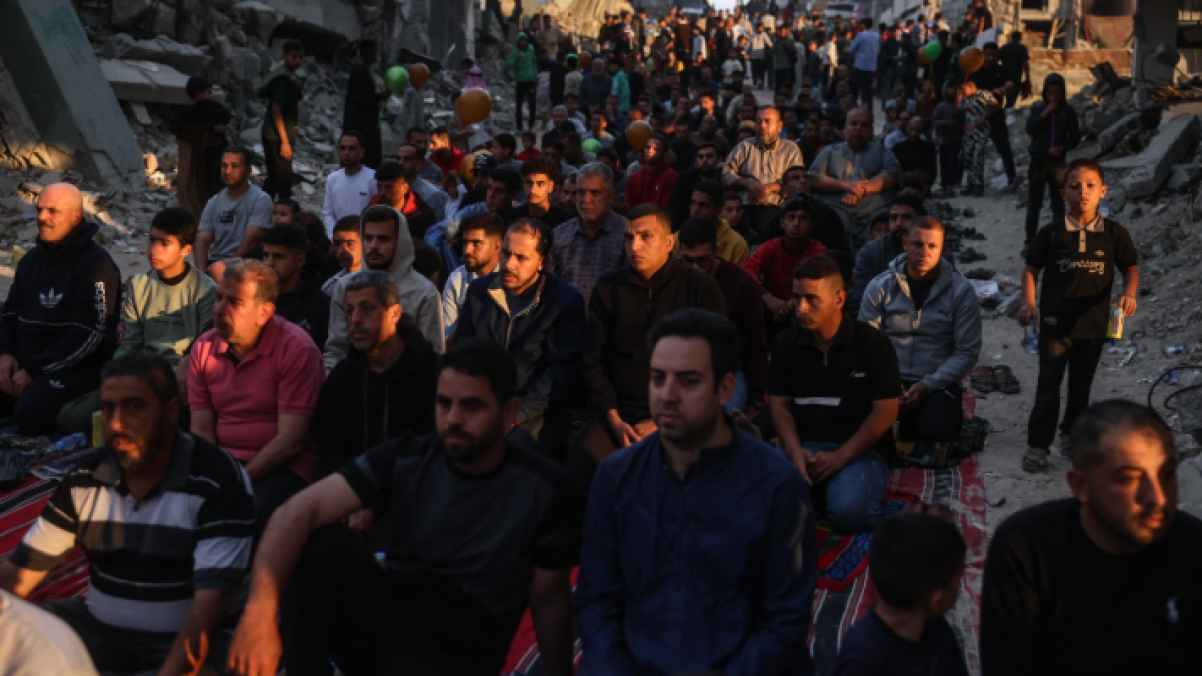
On the morning of Eid al-Adha, Gaza’s streets did not resemble the celebrations Palestinians once knew. Rubble filled every corner, and cracked walls seemed to silently tell the stories of homes that collapsed over the dreams of their owners. Despite this, worshippers lined up on the exhausted ground, performing Eid prayers with hearts weighed down by loss, yet still holding onto faith in life. The scene was greater than a prayer; it was a clear declaration that Gaza, no matter how broken, does not bow.
Men, children, and women stood in the destroyed squares, raising Eid takbeers toward the sky while traces of bombardment surrounded them from every direction. Some spread simple cloths on the ground, while others prayed over stones and dust, yet no one allowed war to strip Eid of its spiritual meaning. The takbeers rose from the ruins like a message of defiance declaring that a soul that knows God cannot be defeated by war machines, and that dignity can still be born from the heart of ashes.
Beneath those buried ruins lie long years of dreams; rooms once filled with children’s laughter, and family photos waiting for holidays to gather around simple and warm tables. Every broken stone in Gaza carries the story of a home once alive with life, yet Palestinians, despite the pain of loss, never stopped holding onto hope. They understood that Eid is not about new clothes or complete homes, but about the human ability to smile despite everything taken away.
In Gaza, Eid this year appeared different in every detail; no sounds of games or crowded markets as in previous years, but rather whispered prayers emerging from hearts exhausted by siege and war. Yet families insisted on creating small moments of joy for their children and exchanging greetings between tents and damaged homes, as if resisting sorrow with love and confronting death with faith. The determination carried by Gaza’s people cannot easily be described; it is a blend of patience, pride, and a sacred stubbornness for life.
Eid al-Adha prayers in Gaza were not merely a religious ritual, but a human image summarizing the story of an entire people. A people standing amid destruction with astonishing resilience, holding their heads high despite all losses, and clinging to their right to life, joy, and dignity. Between rubble and smoke, Palestinians proved once again that nations are not measured by what has been destroyed, but by the determination and steadfastness that remain alive in the hearts of their people.