
Between displacement and hunger… Gaza awaits an Eid with no clear features
Note: AI technology was used to generate this article's audio.
Gaza is living in indescribable pain. Eid al-Adha is a harsh sorrow for the people of Gaza.
In Gaza, Eid al-Adha does not arrive as it does in the rest of the world. There are no takbeer chants filling the streets, no lively markets, and no children running through the alleys in their Eid clothes. Instead, Eid comes heavy with grief, surrounded by tents and pain, as people try to hold on to the remaining traces of joy amid a war that has exhausted souls before homes.
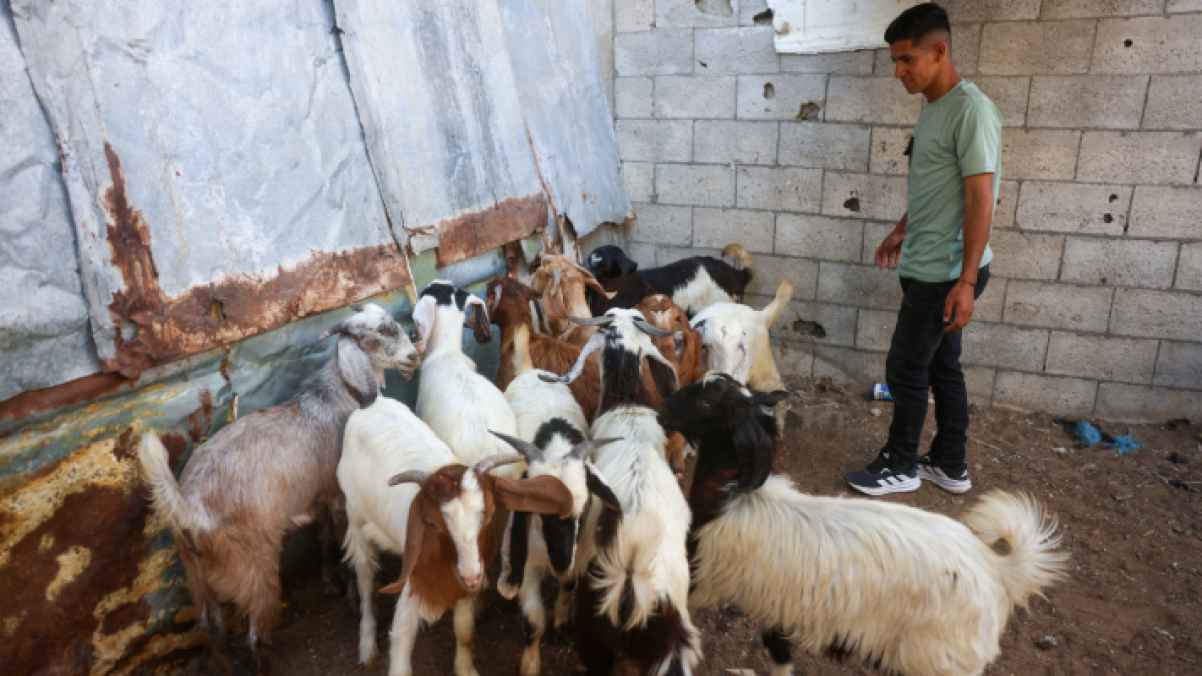
In one of the tents in Khan Younis in the south of the Gaza Strip, a displaced Palestinian stood watching his few livestock, which have become a distant dream for many families after sacrificial animal prices rose unprecedentedly due to the blockade and the ban on livestock entry. While Muslims around the world prepare to receive Eid, Gazans find themselves unable even to afford its simplest rituals.
Tears heavy with sorrow. Eid al-Adha, which symbolizes sacrifice, mercy, and solidarity, has turned in Gaza into an occasion where the tears of loss mix with the bitterness of hunger and displacement. Thousands of families live in tents that do not protect them from summer heat or painful memories, while Eid tables have become almost empty and hopes are greater than people’s ability to endure.
Despite all this pain, the people of Gaza still try to hold on to life. They plant hope in small details and resist breaking with a child’s smile, a mother’s prayer, or a father’s look as he tries to hide his helplessness from his children. There, resilience becomes a daily ritual, and survival itself turns into a form of resistance.
Today, Gaza does not only need food or aid, but also those who feel its deep human suffering. In every tent there is a story, in every eye a delayed tear, and with every Eid that passes over the Strip, the longing for a normal life grows stronger—a life taken from its people, yet they still believe that dawn must come no matter how long the night lasts.