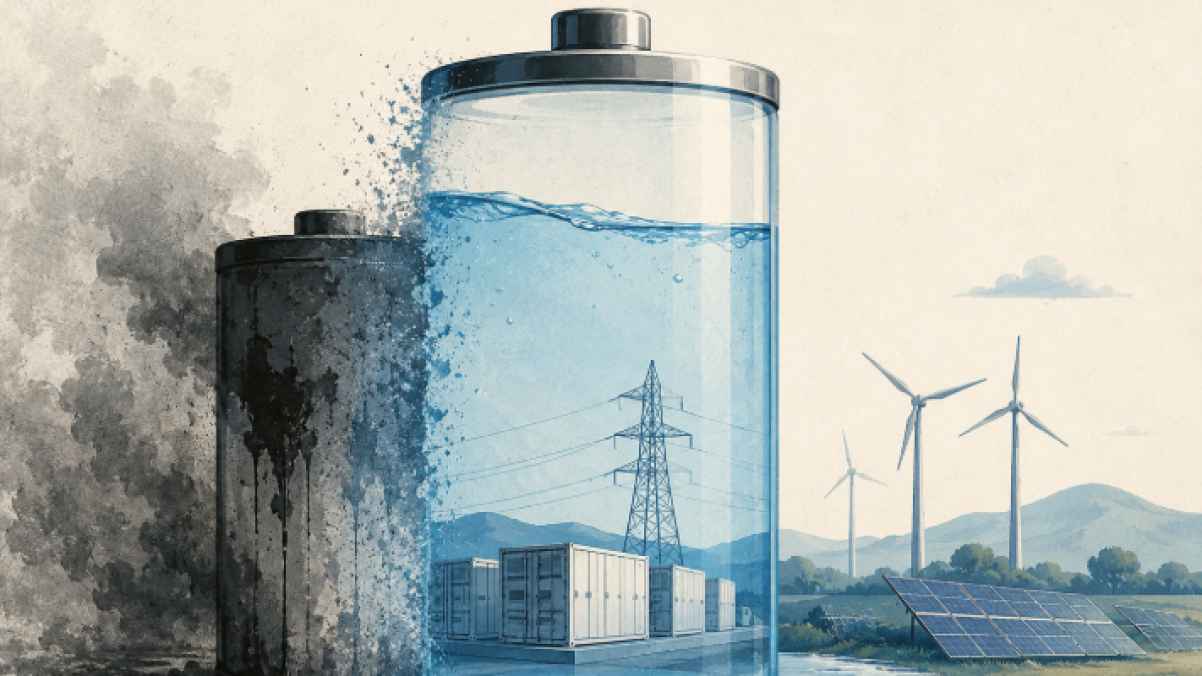
Researchers in China have developed a new type of non-toxic water-based battery that could operate for decades and potentially last into the 24th century, with the added advantage of being safely disposable in the environment.
Researchers say the breakthrough relies on a new chemical structure called covalent organic polymers, which are durable organic materials made from nitrogen and carbon arranged in a tightly bonded framework with microscopic pores.
These materials are used as the anode to facilitate the movement of magnesium and calcium ions within the electrochemical system.
Although organic polymers have previously suffered from short lifespans in aqueous batteries due to degradation in water-based electrolytes, the new design shows strong resistance and stability.
The aqueous electrolyte plays a key role in transporting ions between electrodes, making these batteries non-flammable and more cost-effective compared to conventional alternatives.
Researchers believe this development could pave the way for a new generation of long-lasting, environmentally friendly batteries for future use.