
Student in Egypt Discovers 40-Million-Year-Old Bird Bone - Photo
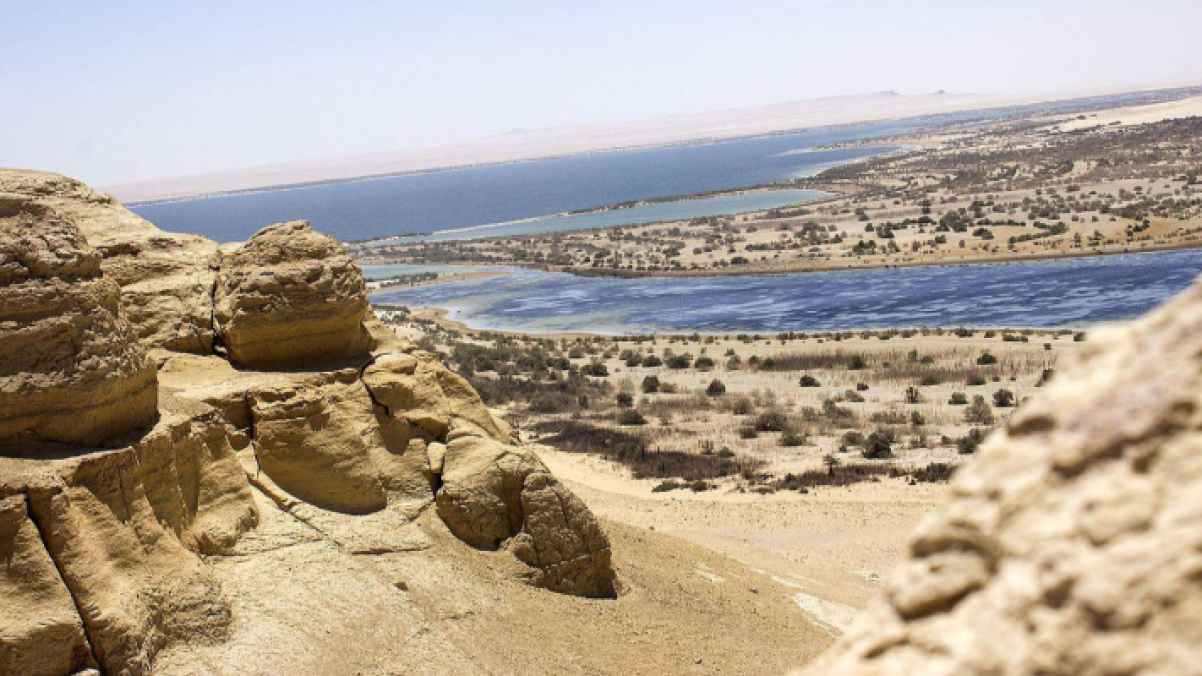
Egypt's Fayoum Desert
Listen to this story:
0:00
Note: AI technology was used to generate this article's audio.
Note: AI technology was used to generate this article's audio.
A student in Egypt stumbled upon a tiny bone fragment in the sands of the Fayoum Desert, unaware that her find could lead to a scientific study revealing a bird that lived in the region some 40 million years ago.
Aya Ibrahim spotted the fossil among desert sediments and handed it over to her university’s Vertebrate Paleontology Center for examination and identification.
Hisham Salam, a paleontologist and founder of the center at Mansoura University, confirmed that his team had identified the fragment as part of a bird’s foot dating back to ancient geological periods.
In statements to an Arab newspaper, Salam explained that initial analysis revealed distinctive features of the bird, including its three-part joints and lightweight bones, noting that the specimen was extracted from rock layers estimated to be around 40 million years old.
He added that the age determination relied on precise global geological maps, placing this bird in a period millions of years after the dinosaurs’ extinction.
While the bone has been identified as avian, the fossil remains “unclassified,” and the team is currently conducting detailed studies to determine its family and whether it represents a previously unknown species.
This discovery is part of a long-term research project spanning more than twenty years, focused on studying rocks and fossils to uncover Egypt’s ancient life.