
6.0-Magnitude Earthquake Hits Japan’s Volcano Islands
Note: AI technology was used to generate this article's audio.
- Strong earthquake shakes volcanic islands north of Japan on Monday morning
- The region is seismically active, but no tsunami threat has been reported
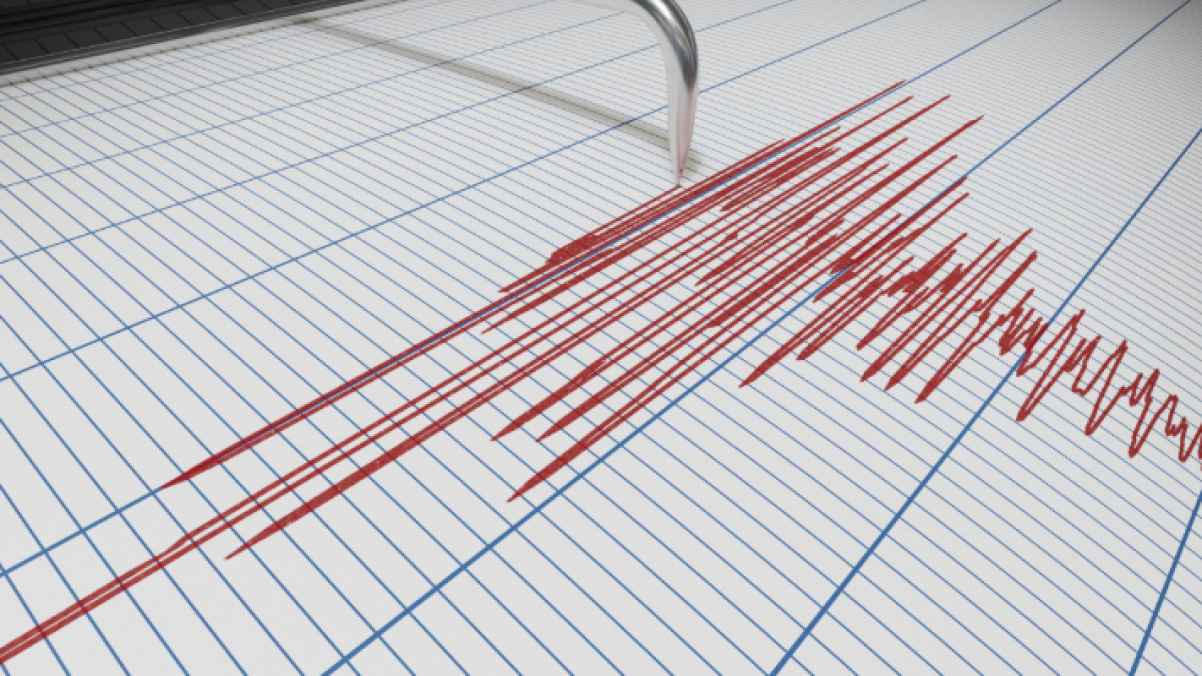
A strong earthquake measuring 6.0 on the Richter scale struck the Volcano Islands region in northern Japan on Monday morning, according to Germany’s Earth Science Research Center.
The report stated that the earthquake’s epicenter was located at a depth of 10 kilometers, at 23.12°N latitude and 144.30°E longitude, according to Xinhua News Agency.
The area previously experienced a shallow but strong quake on January 21, 2026, registering 6.1 on the Richter scale at a depth of 25.5 kilometers, according to data from the U.S. Geological Survey and the European-Mediterranean Seismological Centre (EMSC).
The current epicenter was approximately 937 kilometers northwest of Saipan, 957 kilometers northwest of San Jose village in Tinian, and around 1,090 kilometers northwest of Guam. No tsunami warnings were issued.
The Volcano Islands lie within the Izu-Bonin-Mariana Arc, a subduction zone where the oceanic plate dives beneath the Philippine Sea Plate, making it seismically active with moderate-depth earthquakes caused by faults within the subducting plate.
This area regularly experiences earthquakes between 6 and 6.5 magnitude, which rarely cause surface damage or trigger sea disturbances.
Japan sits on one of the most tectonically active regions in the world, with its complex system of deep trenches and volcanic arcs accounting for roughly 80% of the country’s earthquakes, driven by intense subduction forces.