
Man spends 100 consecutive days underwater
Note: AI technology was used to generate this article's audio.
- Improved health markers linked to aging after the long experiment
- Intensive testing supports theory of high pressure's effect on cells
A man who spent 100 consecutive days beneath the surface of the water says the experience left him feeling as though he were ten years younger, citing scientific explanations he finds convincing.
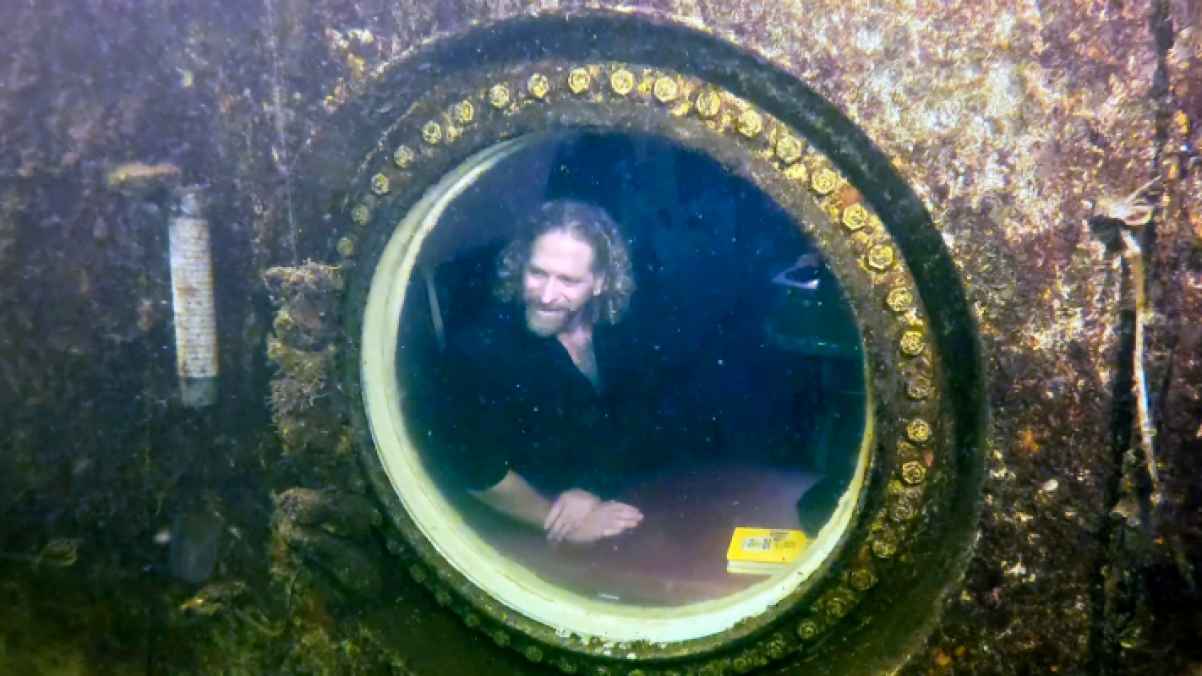
Joseph Dituri, known as “Dr. Deep Sea,” set a new record for the longest time a person has remained underwater, surpassing the previous 73-day mark during a 2023 experiment at the bottom of a lagoon in Key Largo.
Dituri was not completely isolated throughout the period, receiving visits from scientists and relatives who dived down to his submerged living quarters.
A few days before resurfacing—specifically on day 93—he said he felt a level of vitality comparable to what he had a decade earlier.
The experiment formed part of a scientific mission called “Neptune 100,” during which he conducted ocean-conservation research while also undergoing extensive medical testing to examine how a high-pressure environment affects the human body.
According to the University of South Florida, the hypothesis proposed that increased surrounding pressure could help extend lifespan and influence the aging process.
During his time underwater, researchers observed several physical changes, including a slight reduction in height alongside improvements in sleep quality, cholesterol levels, and inflammation markers.
Scientific explanations point to telomeres—structures at the ends of chromosomes that protect DNA but gradually shorten with age. However, studies of oxygen-rich, high-pressure environments similar to the one Dituri lived in suggest these telomeres may lengthen again.
Dituri said he underwent daily hours-long examinations, including blood, urine, and saliva tests, as well as heart and brain monitoring and pulmonary-function assessments, noting that scientific work occupied between seven and eight hours each day.
He was 55 when the experiment began, while biological measurements placed the true age of his cells at 44. By the time the mission ended, that figure had dropped to 34—reinforcing his sense that he emerged from the depths healthier and biologically younger.