
Scientists document trees glowing during thunderstorms for the first time — images
Note: AI technology was used to generate this article's audio.
- Direct observation confirms long-theorized electrical glow in trees during storms
- First-ever field capture of faint canopy emissions linked to atmospheric electricity
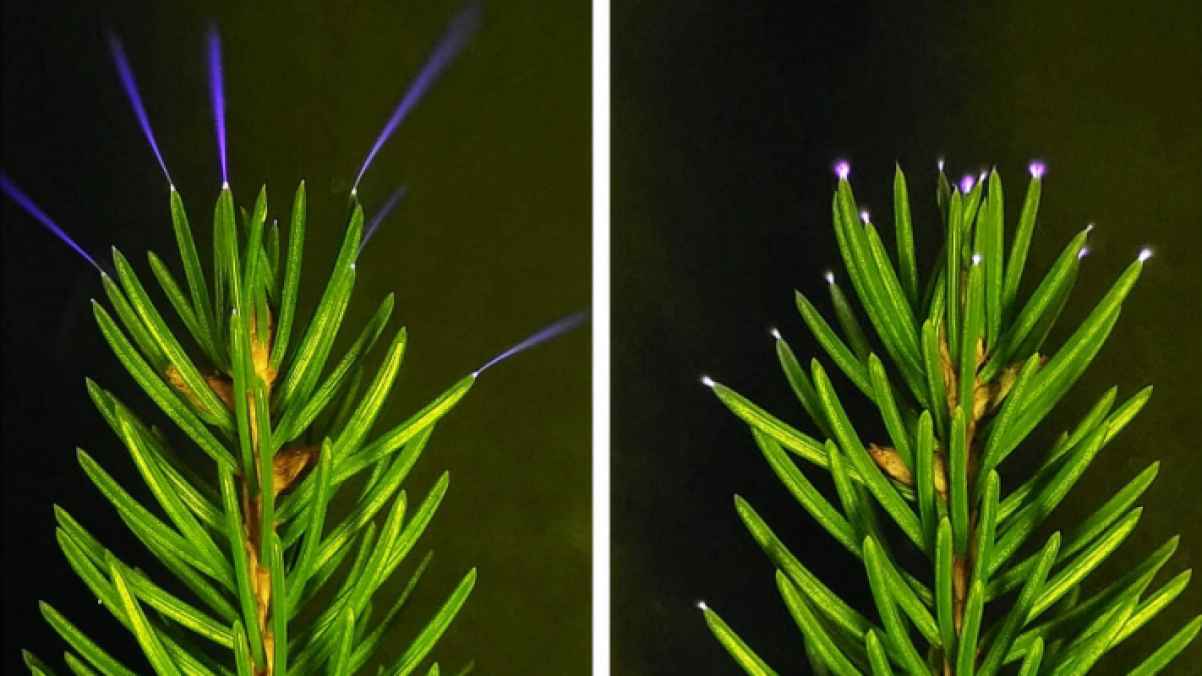
A research team from Penn State University has successfully documented a subtle electrical phenomenon long hypothesized by scientists: a faint glow appearing at the tops of trees during thunderstorms, caused by a process known as corona discharge.
Although the effect has been discussed in scientific literature for nearly a century, it had never been directly observed in natural outdoor conditions, with its existence previously inferred but not visually confirmed.
The lead researcher said the breakthrough validates decades-old theories and marks an important step in understanding electrical interactions within the atmosphere.
These discharges occur at the edges of leaves and pine needles when atmospheric electric fields intensify ahead of a storm, producing extremely weak bursts of ultraviolet light that are nearly invisible to the naked eye.
To capture the phenomenon, the team used a specialized mobile system equipped with a telescope and a highly sensitive ultraviolet camera, enabling them to detect the signals during a thunderstorm in North Carolina.
During the observation, hundreds of faint flashes were recorded across different tree branches, appearing and disappearing within fractions of a second while shifting with wind movement.
The findings suggest the phenomenon is not rare as previously thought, but instead occurs widely across multiple tree species in similar patterns, opening new avenues for research into its role in atmospheric chemistry.